
 AI Governance
 Data Centers
 Drones
 Climate
 Privacy
 2026 Maine Senate
 Bob Dylan
Building Flexible Net-Zero Energy Systems
Coverage from Physics World, Energy-Storage.News, and others
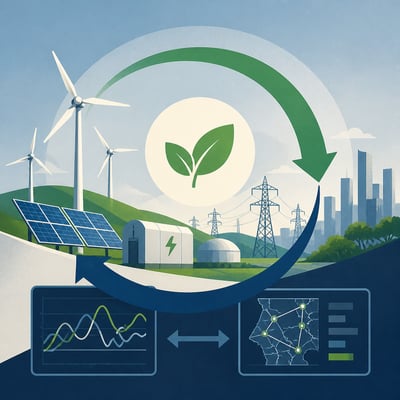
Net-zero energy systems increasingly depend on coordinating efficient buildings, electrified heating, renewable generation, flexible electricity demand, and storage.
Research and planning studies highlight heat pumps, smart charging, multi-day storage, and open modelling as tools for balancing variable wind and solar power while limiting curtailment, price volatility, and fuel dependence. The evidence is strongest for Germany and broader European system models, while residential applications show how these principles can be implemented at the building level.
The story now puts stronger emphasis on specific technologies and modelling evidence, adding residential heat-pump implementation and a linked long-term/hourly framework that says a fully renewable German system is technically and economically feasible in tested scenarios. It also reframes the political challenge as sectoral electricity-price differences rather than broader system reliability.
The story broadens from a methodological focus on net-zero modeling to concrete system design themes, especially efficient buildings, heat pumps, and Germany-specific net-zero pathways through 2045. It also puts more emphasis on resilience and price impacts from multi-day storage under prolonged low-wind and low-solar conditions.