
 AI Governance
 Data Centers
 Drones
 Climate
 Privacy
 2026 Maine Senate
 Bob Dylan
BKV Expands Texas Carbon Capture
Coverage from Pgjonline, Carbon Herald, and others
Going On
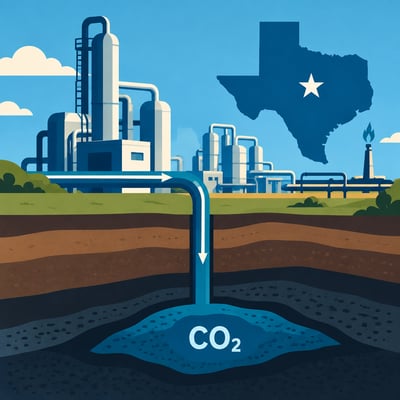
BKV commissioned the Eagle Ford and Cotton Cove carbon capture and sequestration facilities in Texas.
A few articles that between them cover the whole topic, picked by the role each one plays.
If you read one thing
BKV Acquires Barnett Shale Assets and Operated CCS ProjectIt provides the broadest overview of how BKV’s Barnett Shale acquisition integrates gas production, infrastructure, and carbon capture.
Best explainer
BKV Brings Two Texas Carbon Capture Facilities OnlineIt adds operational detail on the two Texas facilities, including their natural-gas-processing capture model, Class II injection, and planned capacity growth.
The forces this coverage keeps returning to, and which way each has moved.
Integrated Texas gas-and-CCS platform
BKV is combining natural-gas production, midstream infrastructure, processing, and carbon capture and storage within a single Texas operating platform. The Barnett Shale acquisition adds production, infrastructure, and an existing operated CCS project to that integrated footprint.
Operational CCS capacity is expanding
BKV has brought two Texas carbon-capture facilities online, adding permanent sequestration capacity linked to natural-gas processing. The projects support the company’s stated ambition to scale annual CO2 injection substantially by 2028.
No new-member articles were supplied, so there is no evidence of a material change in BKV’s Texas carbon-management expansion.
Previously
BKV Corporation is expanding its Texas carbon-management platform through two newly commissioned capture and sequestration facilities and the acquisition of Barnett Shale production, processing, pipeline, and CCS assets. Eagle Ford and Cotton Cove are designed to sequester a combined 122,000 metric tons of CO2 annually, while the acquired Barnett project had captured more than 100,000 metric tons over the preceding year. The developments link carbon capture directly to BKV’s natural gas processing operations and support the company’s stated goal of reaching 1.5 million metric tons of annual CO2 injection capacity by 2028.
Every article behind this topic, ranked by CI Score.