
 AI Governance
 Data Centers
 Drones
 Climate
 Privacy
 2026 Maine Senate
 Bob Dylan
Hawaiʻi Weighs Solar, Storage, LNG
Coverage from Civil Beat, KHON2, and others
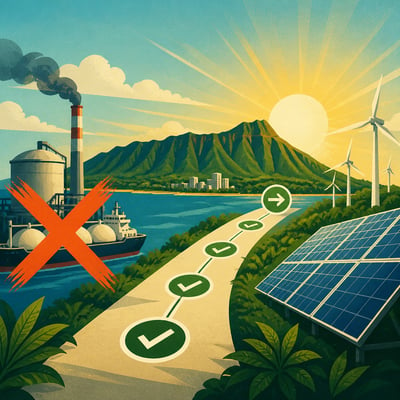
Hawaiʻi is advancing an island-by-island transition from imported fossil fuels toward renewable electricity, with solar, battery storage, electrification, geothermal power, and grid modernization at the center of planning.
Recent Oʻahu modeling finds that reducing solar development costs and avoiding additional fuel-burning plants could lower long-term customer costs, while Hawaiian Electric and policymakers continue to consider LNG, renewable-fuel, and geothermal options. The transition remains shaped by land constraints, community concerns, resilience needs, and the distinct operating conditions of each island.
The story now places greater weight on implementation: Hawaiian Electric has moved from general planning to a concrete Lānaʻi procurement for dispatchable solar-plus-storage, while the Oʻahu modeling has been sharpened into a clearer case against additional fuel-burning plants. The framing also tightens around cost-reduction assumptions and the practical constraints that still shape Hawaiʻi’s island-by-island transition.
The story has sharpened from a broad clean-energy planning contest into a more quantified, Oʻahu-centered case for solar and storage, anchored by new cost estimates and more explicit criticism of LNG and other fuel-burning alternatives. It also adds geothermal and Lānaʻi procurement as concrete pieces of the transition rather than just general planning themes.