
 AI Governance
 Data Centers
 Drones
 Climate
 Privacy
 2026 Maine Senate
 Bob Dylan
Arizona Clean Energy Faces Pushback
Coverage from Inside Climate News, Arizona Capitol Times, and others
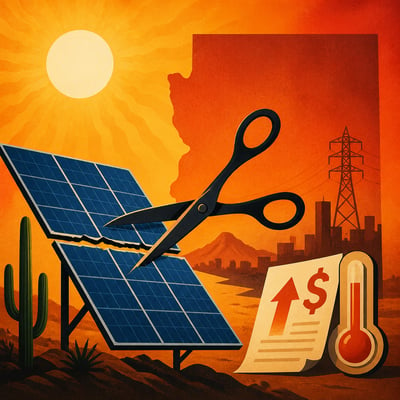
Arizona’s clean-energy transition is facing policy and financial headwinds as regulators reconsider renewable standards, utilities propose rate increases and natural-gas infrastructure, and large data centers drive projected demand growth.
At the same time, community solar cooperatives, clean-energy candidates, and public-health advocates are pressing for solar, storage, efficiency, and lower-cost power. The central tension is how Arizona can expand reliable electricity without shifting uncertain infrastructure costs and pollution burdens onto households.
The story now places more emphasis on policy and financing headwinds, adding federal funding and tax-credit changes as a new constraint on Arizona’s clean-energy buildout. It also broadens the cast slightly to include the Arizona Legislature and frames SRP’s board race more explicitly around gas versus low-carbon resources.
The story has sharpened around a more specific near-term fight over who will pay for Arizona’s rising power needs, with APS rate hikes, data-center-driven load growth, and SRP governance now more central. It also adds a concrete policy setback for clean energy through the repeal of the 15% renewable standard and introduces community solar co-ops as a practical household response.
- APS is seeking a 14% rate increase.
- The ACC repealed Arizona’s 15% renewable-energy standard.
- SRP’s governance election could shape its generation mix.
- Solar co-ops are helping households reduce installation and contract costs.
- Data centers are intensifying infrastructure cost-allocation disputes.
The story has shifted from a broad debate over Arizona power growth to a more explicit policy fight over how to balance reliability, affordability, and pollution under heat-driven demand. The new version sharpens the role of federal funding cuts and clean-energy planning as central constraints, while keeping the core conflict intact.
Arizona is facing fast-rising electricity demand, especially from data centers, chip manufacturing, and extreme heat, while policymakers and utilities split between fossil-fuel expansion and faster clean-energy buildout. The debate now includes rate hikes, grid upgrades, renewable standard rollbacks, and the affordability and health burden on low-income households.