
 AI Governance
 Data Centers
 Drones
 Climate
 Privacy
 2026 Maine Senate
 Bob Dylan
Arctic Thaw Damages Cultural Archives
Coverage from Arctic Today, EurekAlert!, and others
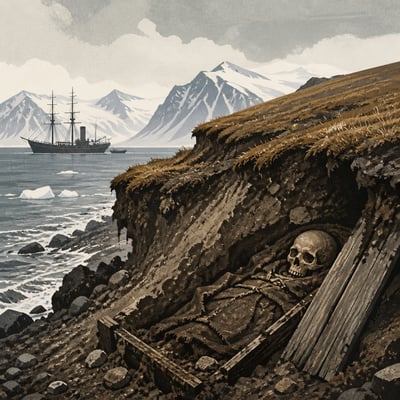
Accelerating Arctic warming, permafrost thaw, and coastal erosion are damaging archaeological sites that preserve evidence of past human lives.
At Likneset in Svalbard, graves, textiles, and burial structures have deteriorated across successive excavations, while research in Greenland has found diverse microbial communities and antimicrobial-resistance genes preserved in ancient middens. The findings increase pressure to adapt Arctic heritage management and to assess what thawing material could release into surrounding environments.
The main update is a stronger warning signal: the Greenland research now explicitly identifies antimicrobial-resistance genes alongside preserved microbes, raising the potential downstream environmental impact of thawing material. The framing also shifts toward faster degradation and a broader need to adapt heritage planning and monitoring.
The story broadens from a single threatened Svalbard burial site into a wider Arctic heritage and environmental-risk story. It now adds Greenland midden research and shifts the emphasis toward managing thawed biological materials and uncertain public-health implications, not just irreversible heritage loss.