
 AI Governance
 Data Centers
 Drones
 Climate
 Privacy
 2026 Maine Senate
 Bob Dylan
Apartments Advance Building Decarbonization
Coverage from Grist, New Scientist, and others
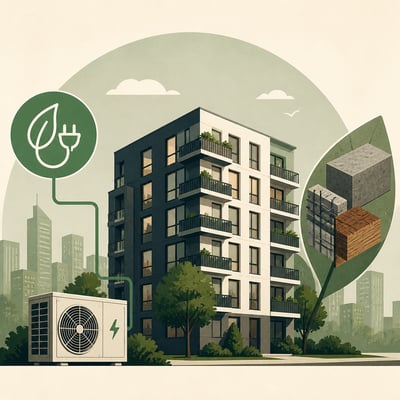
The topic centers on using multifamily housing, efficient building design, and electrification to reduce emissions while expanding or preserving affordable housing.
Apartments generally use less energy per resident than detached homes, and their relatively high rate of electric heating creates opportunities to pair heat pumps with cleaner electricity. The material also highlights zoning reform, public housing investment, and procurement programs such as New York City’s Clean Heat for All Challenge as ways to scale these approaches, while broader city-level research shows that construction emissions must also fall sharply through better design, material choices, and building priorities.
The story now puts stronger emphasis on construction-emissions reduction as a central constraint, not just a co-benefit of affordable housing and electrification. It also introduces new implementation details around New York City public housing retrofits and broadens the technology set beyond heat pumps to include induction and geothermal options.
The story now puts more emphasis on electrification as an implementation pathway, especially in new apartments and public housing, rather than mainly on apartments as a general emissions-reduction concept. It also adds a more explicit policy and procurement angle through NYCHA and the Clean Heat for All Challenge.
The story broadens from apartment electrification and public-housing retrofits into a wider citywide housing-emissions framework that includes construction carbon, urban form, and transportation impacts. It also introduces a more specific evidence base, especially a Toronto-led study and NYCHA procurement efforts, that reframes the issue around long-term decarbonization constraints.
The framing has broadened from a climate retrofitting story to a more explicit housing-supply and urban-density story. Apartments and public housing are now positioned as part of a wider strategy that links building emissions, zoning reform, and low-carbon housing growth.
The story has shifted from a broad argument about dense housing and building emissions to a more concrete focus on apartment and public-housing electrification in New York, especially NYCHA. The current version emphasizes implementation pathways like procurement, pilots, and heat-pump retrofits, while adding affordability and utility-cost benefits as part of the framing.
- NYCHA is now used as a public-housing electrification test case.
- Procurement and pilot projects are newly emphasized as implementation mechanisms.
- Induction cooking is added alongside heat pumps and cleaner electricity.
- The story now centers more specifically on New York City and New York State.
- Affordability and utility-cost relief are newly linked to decarbonization.
The material centers on apartments and other dense housing as a climate strategy that can also address housing shortages. The strongest recurring argument is that smaller, shared-wall buildings are easier to electrify and can cut emissions compared with detached homes, especially when paired with heat pumps and clean electricity. A second thread focuses on construction emissions, showing that cities must also reduce the carbon intensity of new building materials and design if they want to stay within climate limits.