
 AI Governance
 Data Centers
 Drones
 Climate
 Privacy
 2026 Maine Senate
 Bob Dylan
Texas Grid Balances Rapid Demand Growth
Coverage from Houston Chronicle, The New York Times, and others
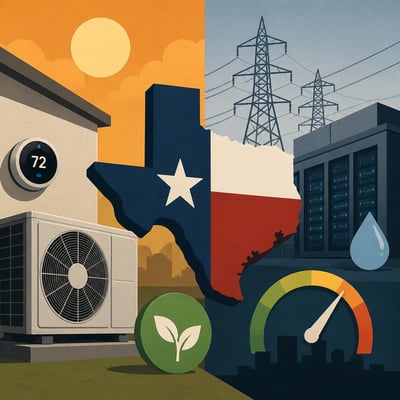
Texas is adding solar generation, battery storage, weatherization measures, and new large-load rules as data centers and extreme temperatures push electricity demand higher.
The grid has recently maintained reserves during severe heat and a winter storm, but large data-center interconnection queues, water constraints, transmission costs, and localized outages continue to test the system. Heat pumps, building efficiency, and flexible electricity use are presented as ways to reduce peak demand, though funding limits and changing winter demand could weaken their benefits over time.
Texas’s grid story is shifting from general reliability preparation to active rulemaking and cost management for massive data-center load growth. The new emphasis is on large-load interconnection rules, transmission and water constraints, and whether efficiency can still materially offset rising demand.
The story now centers more directly on Texas’s near-term grid stress from record summer demand and the operational response: ERCOT says reserve margins should hold, helped by solar and batteries, even as data-center growth keeps pushing the interconnection system and water resources to the forefront. The policy debate has also sharpened around redesigning large-load studies and using demand-side tools alongside new generation.