
 AI Governance
 Data Centers
 Drones
 Climate
 Privacy
 2026 Maine Senate
 Bob Dylan
China’s Five-Year Climate-Energy Plan
Coverage from Carbon Brief, Centre for Research on Energy and Clean Air, and others
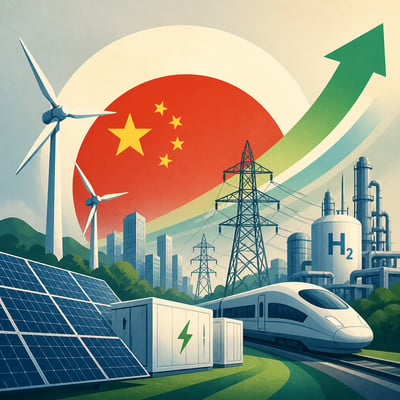
China’s 2026–2030 climate and energy plans accelerate renewable power, storage, transmission, electric vehicles, hydrogen, nuclear energy, and related industrial technologies.
At the same time, the strategy retains a significant role for coal and relies mainly on carbon-intensity, sectoral, and non-CO2 emissions controls rather than setting a clear absolute emissions cap or coal phaseout schedule. The resulting direction combines clean-energy growth and stronger climate governance with continued emphasis on energy security, industrial capacity, and international cooperation.
The story gains more specific climate-governance commitments, including a 17% carbon-intensity reduction target and stronger oversight, while broadening to international cooperation with Global South partners. The fundamental coal-versus-clean-energy tension remains unchanged.
The story has shifted from a broad clean-energy planning picture to a more execution-focused one: the new version emphasizes implementation through provincial plans and system flexibility constraints, while making coal’s continued security role and weak absolute-emissions limits more explicit. It also adds stronger emphasis on rising demand and grid resilience as the main bottlenecks.