
 AI Governance
 Data Centers
 Drones
 Climate
 Privacy
 2026 Maine Senate
 Bob Dylan
Global Climate Risk Assessment
Coverage from Nature, The Conversation, and others
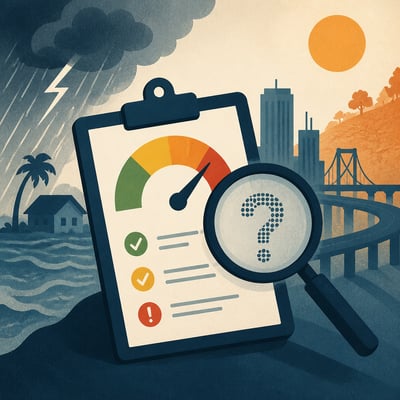
Climate scientists and risk researchers are calling for an authoritative, regularly updated global assessment that explains the severity, likelihood, and avoidability of climate risks.
The proposed framework would complement IPCC science assessments by examining outcomes such as extreme heat, food and water insecurity, infrastructure disruption, sea-level rise, and cascading social impacts. Its value would depend on transparent methods, clear communication of uncertainty, and international coordination, all of which remain unresolved challenges.
The story now more explicitly centers on an internationally mandated, regularly updated global climate-risk assessment, and adds stronger emphasis on worst-case and avoidability framing. It also tightens the implementation challenge set around political coordination, regional differences, and regular updating.
The story has shifted from a general call for better climate-risk assessment to a more operational framing: the goal is now explicitly to turn climate science into probabilities, thresholds, and decision support. At the same time, a new transparency critique is sharpened by evidence that influential climate-risk research rarely shares data and code.