
 AI Governance
 Data Centers
 Drones
 Climate
 Privacy
 2026 Maine Senate
 Bob Dylan
Solar-Plus-Storage Reshapes Grid Flexibility
Coverage from World Economic Forum, cntepower, and others
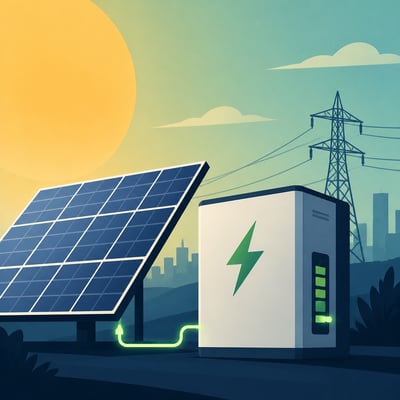
Solar generation is increasingly being paired with battery storage and grid-forming inverter controls to shift surplus power, reduce curtailment, provide balancing services, and support stable operation as renewable penetration rises.
Projects and industry programs in Australia, Denmark, Europe, and other markets show that the technology is moving from demonstration toward broader deployment, but progress still depends on interconnection standards, interoperable controls, cybersecurity, and market rules that recognize the services storage provides.
The story has sharpened from a broad solar-plus-storage transition into a more concrete 2026 deployment phase, with specific projects and industry tools now illustrating how grid-forming and hybrid assets are being operated in practice. The emphasis has also expanded from general technical barriers to named operational lessons, cybersecurity, and compensation issues across specific markets.
The story has broadened from solar-plus-storage as a dispatchability and curtailment solution into a more explicit grid-stability narrative centered on grid-forming inverters. It now emphasizes hybrid assets and microgrids as active grid resources, with adoption still constrained by standards, interoperability, and uneven compensation.