
 AI Governance
 Data Centers
 Drones
 Climate
 Privacy
 2026 Maine Senate
 Bob Dylan
2150 Raises €210M for Urban Climate Tech
Coverage from The Tech Buzz, ESG Today, and others
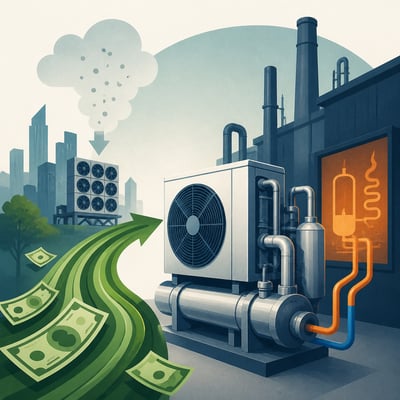
European climate investor 2150 has raised a €210 million second fund to back technologies addressing urban-system emissions, including industrial heat pumps, recycling, direct air capture and resource efficiency.
The fund reflects growing venture interest in practical city and industrial decarbonization solutions, but broader deployment remains constrained by long payback periods, uneven policy support, project complexity and inconsistent carbon data. Standardized contracts, public guarantees and performance-based finance are identified as potential ways to make industrial retrofits more investable.
The story has shifted from a simple fundraising and portfolio update to a clearer view of the financing mechanics needed to scale industrial decarbonization. The new version adds more specific barriers and a concrete set of financing tools that could make retrofit projects investable.
The story now adds more concrete fund details and broadens from a narrow heat-pump/direct-air-capture focus to a wider industrial decarbonization portfolio. It also introduces the financing-friction explanation for why these technologies still struggle to scale.
The story has shifted from a general financing challenge around urban decarbonization to a concrete venture-fund update: 2150 has raised a second €210 million fund and is now visibly deploying it into named portfolio companies. The new emphasis is on early-stage climate venture execution and reported emissions impact, rather than on policy or bankability constraints.
- 2150 raised a second €210 million fund.
- The fund targets early-stage deployment with €5-6 million checks.
- AtmosZero is highlighted as a portfolio company.
- MissionZero is highlighted as a portfolio company.
- Portfolio companies reportedly mitigated about one megaton of CO2 in 2025.
Capital is flowing into urban decarbonization tools such as industrial heat pumps and direct air capture, but financing remains constrained by project risk, fragmented policy, and weak standardization for industrial retrofit deals.