
 AI Governance
 Data Centers
 Drones
 Climate
 Privacy
 2026 Maine Senate
 Bob Dylan
Air Conditioning’s Climate Trade-Off
Coverage from Phys.org, University of Birmingham, and others
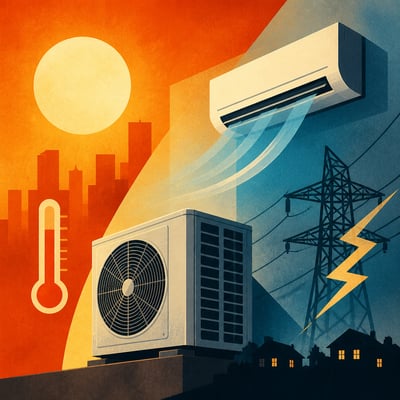
Air-conditioning use is expanding as heatwaves intensify, with studies and recent energy analyses pointing to sharply higher cooling demand through 2050.
Cooling can reduce heat exposure and associated health risks, but its climate impact depends on appliance efficiency, refrigerants, building design, and the carbon intensity of electricity. The central challenge is widening access to safe cooling without increasing emissions, peak power stress, and urban heat, particularly in South Asia, Africa, and other rapidly warming regions.
The story gains a quantified long-term dimension: cooling demand could more than double by 2050, with South Asia and Africa facing especially severe access and vulnerability challenges. The framing also becomes more technically nuanced, emphasizing refrigerants, grid carbon intensity, building design, and location-specific solar effects.
The story narrows somewhat in geography and adds sharper emphasis on where the pressure is most acute: historically cooler parts of the United States and Europe, alongside India’s fast-growing market. It also reframes the downside from general grid and cost stress to a broader equity and emissions problem tied to fossil-fuel power and installation costs.