
 AI Governance
 Data Centers
 Drones
 Climate
 Privacy
 2026 Maine Senate
 Bob Dylan
Who Owns Enterprise AI Risk?
Coverage from Lexology, CIO, and others
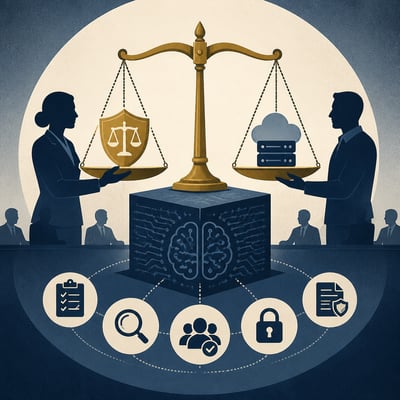
The material examines whether general counsel and legal teams should move from advisory roles toward accountable ownership of enterprise AI strategy, risk, and reporting.
Surveys indicate that responsibility remains fragmented, while boards are seeking clearer oversight and only a minority of legal teams feel prepared to manage AI risks confidently. The proposed approach combines legal leadership with IT control over infrastructure and cross-functional processes for use-case approval, verification, auditability, vendor oversight, privacy, security, and compliance.
If you read one thing
It provides the clearest overview of accountable GC leadership alongside IT responsibilities and the gap between governance structures and deployment readiness.
Best explainer
It explains how CIO, legal, and business teams can share decision rights through use-case-specific assessment and documented controls.
The evidence
It adds practical implementation detail on legal AI literacy, tool inventories, risk-based controls, and integration with compliance processes.
Accountability is shifting toward a cross-functional operating model
The emerging model assigns executive accountability for AI without making legal the sole owner. Legal is positioned to coordinate policy, guardrails, and reporting, while technology retains infrastructure and security responsibilities and business functions share operational decision rights.
Formal governance is ahead of deployment readiness
Organizations are forming AI risk committees and adopting AI tools, but implementation readiness remains uneven. Only 14% of surveyed firms were described as deployment-ready, reinforcing the need for practical legal and technical literacy, use-case-specific controls, verification, inventories, audit trails, and escalation processes.
The new articles reinforce the existing model of shared AI governance, central guardrails, defined decision rights, and cooperation between legal, technology, and business teams, but provide no material change to the Topic.
Previously
The material examines whether general counsel and legal teams should move from advisory roles toward accountable ownership of enterprise AI strategy, risk, and reporting. Surveys indicate that responsibility remains fragmented, while boards are seeking clearer oversight and only a minority of legal teams feel prepared to manage AI risks confidently. The proposed approach combines legal leadership with IT control over infrastructure and cross-functional processes for use-case approval, verification, auditability, vendor oversight, privacy, security, and compliance.