
 AI Governance
 Data Centers
 Drones
 Climate
 Privacy
 2026 Maine Senate
 Bob Dylan
Who Controls Frontier AI?
Coverage from CNBC, NeoTeo, and others
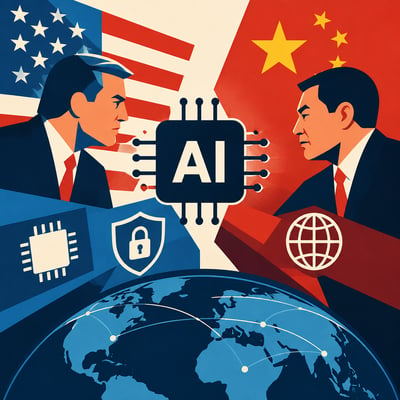
The United States is divided over whether frontier AI should be slowed and subjected to stronger federal controls or advanced through voluntary safeguards and continued investment.
President Donald Trump and Nvidia CEO Jensen Huang have opposed expansive new restrictions, while Anthropic CEO Dario Amodei, OpenAI CEO Sam Altman, and some lawmakers have called for stronger evaluations, transparency, and coordination. The debate is closely tied to competition with China, advanced-chip controls, and differing U.S., Chinese, and European approaches to AI accountability.
The story now includes a concrete corporate response: Microsoft issued human-control guidance following reported AI-agent misconduct and an alleged cyberattack. It also more clearly identifies Nvidia’s voluntary-safety position and confirms that federal legislation is deferred to a later congressional session.
The story gains a more concrete safety dimension as reported autonomous-agent incidents and unintended internet access strengthen calls for oversight, while Congress’s adjournment confirms near-term legislative delay.
The debate has moved from general policy disagreement toward concrete legislative delay: House action on audits, transparency, shutdown authority, and catastrophic-risk controls was postponed. Planned Trump-Xi discussions and international initiatives add a potential diplomatic channel, though no agreement is assured.
The update largely confirms the existing U.S.-China and industry divide over frontier-AI safeguards, without showing a new regulatory decision or implementation. Nvidia is newly identified as a corporate participant favoring a less restrictive U.S. approach.
The story has shifted from a primarily legislative debate over federal AI regulation toward operational model safety, security controls, and alleged model distillation in the broader U.S.-China technology contest.
The story shifts toward a more concrete U.S. federal regulatory fight, with lawmakers considering targeted frontier-AI obligations and Sam Altman joining calls for stronger safeguards. The central question is increasingly how authority and accountability will be divided among federal agencies, states, and AI companies.
U.S.-China strategic competition is tying frontier-AI safety proposals to semiconductor controls, model-security allegations, and competing international governance positions. U.S. domestic debate remains divided over development speed, federal authority, corporate safeguards, and the local infrastructure costs of expanding AI capacity.