
 AI Governance
 Data Centers
 Drones
 Climate
 Privacy
 2026 Maine Senate
 Bob Dylan
Universities Tighten Student AI Rules
Coverage from Business Insider, Chronicle, and others
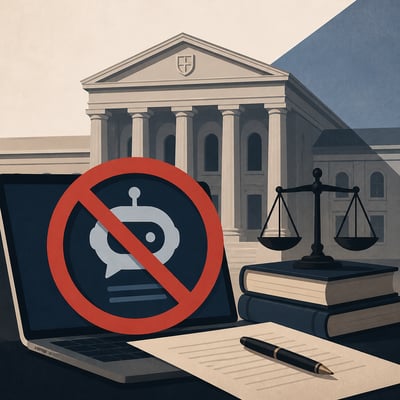
Universities and legal-education programs are tightening rules on generative AI in exams, assessed writing, and other credited work.
UC Berkeley Law’s Summer 2026 policy establishes a restrictive default that permits limited source identification but bars AI-assisted drafting and related tasks, while the University of Edinburgh’s philosophy department adopted a default ban on generative AI in assessed work. The broader shift reflects concerns about academic integrity, student development, fabricated citations, confidentiality, and the difficulty of enforcing rules as AI features become embedded in search and legal research tools.
The story has shifted from a general tightening of student AI rules to a more concrete picture of implemented institutional policies, especially Berkeley Law’s restrictive Summer 2026 default and Edinburgh’s assessed-work ban. It also now extends more explicitly into legal practice guidance, with new references to externship-site policies and regulatory pressure on accurate AI use.
The story broadened from two school policy examples into a wider pattern of law-school AI restrictions that now explicitly includes externships and professional confidentiality concerns. The new material also shows implementation pressure from legal-practice guidance and stricter enforcement mechanisms, not just classroom integrity.