Last Update: 09/22/2026 at 11:34 PM EST

The Fight Over Frontier AI Controls

Coverage from CryptoRank, Memeburn, and others
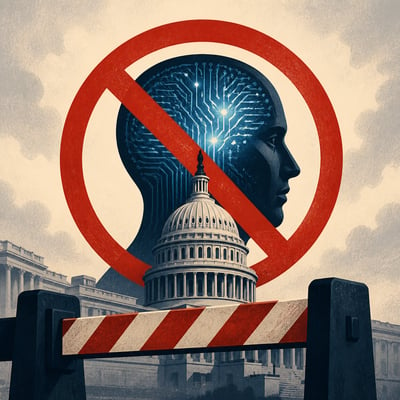
The Fight Over Frontier AI Controls topic image

U.

S. officials, technology executives, and lawmakers are debating how far federal oversight should extend over advanced AI systems. The proposals range from voluntary or industry-funded pre-release reviews to a FINRA-style national oversight body and a criminal ban on systems defined as superintelligent. The dispute could affect how quickly frontier models reach the public, impose different burdens on open-weight systems such as Meta’s Llama, and sharpen tensions between AI safety, commercial interests, and competition with China.

Key Articles3 of 33 articles

If you read one thing

It clearly frames the central conflict between mandatory frontier-model testing and voluntary oversight while covering the White House proposal and corporate opposition.

Memeburn / Temaz Tra

The counter-case

It represents the voluntary-governance side through Zuckerberg’s opposition to a national AI regulator and preference for lighter controls.

The Olympian / Hillary Remy

The evidence

It adds the distinct congressional dimension by explaining the proposed criminal ban on superintelligent AI and its potential frontier-research pause.

TechTimes / Clayton Lewis
Key Issues

An unresolved contest over oversight architecture

U.S. policy remains divided between a FINRA-style body for pre-release testing and voluntary, industry-led or light-touch standards. The White House proposal remains under discussion without a decision timeline, while technology executives are directly lobbying over its design.

Mixed

Drawn from 5 articles

Potential controls threaten rapid and open-weight releases

Mandatory pre-release testing or approval could delay launches and impose different practical burdens on Meta’s open-weight Llama releases than on closed-model systems. That gives Meta a commercial incentive to favor voluntary standards, even as supporters argue that common review is needed for meaningful risk evaluation.

Stable

Drawn from 5 articles

Congressional proposals now extend to criminal prohibition

Lawmakers’ approaches span voluntary standards, independent audits, shutdown authority, development pauses, and a proposed criminal ban on developing or deploying systems defined as superintelligent. These remain proposals rather than binding law, and enforcement would depend on unresolved definitions and benchmark methods.

Strengthening

Drawn from 5 articles

Key Numbers

20 years

maximum prison term

for individuals convicted under the proposal

On September 3, 2026, Senator Bernie Sanders and Representative Greg Casar announced the Ban Artificial Superintelligence Act, legislation that would make building a superintelligent AI system a federal crime punishable by up to 20 years in prison.

TechTimes

approximately 630,000 registered representatives

representatives covered by FINRA rules

FINRA is a private, nonprofit organization that writes and enforces rules for more than 3,000 brokerage firms and approximately 630,000 registered representatives.

BND

30 days

advance access to new models before release

initial proposal

The framework was proposed by Google DeepMind CEO Demis Hassabis. It would initially give the organization access to new models up to 30 days before release so experts could test for dangerous capabilities, including risks related to cybersecurity and biological research.

Memeburn

62.7% percent

ARC-AGI-3 benchmark score

ARC Prize score using a provider-neutral standard harness

OpenAI reported a 98.6% score on the ARC-AGI-3 benchmark using its Provider Adapter harness, while ARC Prize independently scored the model at 62.7% using a provider-neutral standard harness. The discrepancy highlighted a central enforcement problem: the proposed regulator would need reliable, agreed methods for determining whether a system crossed the bill’s superintelligence threshold.

TechTimes

Contested Issue

Should advanced AI models undergo mandatory regulator-led pre-release testing and approval, or should oversight rely primarily on voluntary, light-touch industry standards?

The corpus presents incompatible policy prescriptions. Supporters of a FINRA-style body favor independent testing, common evaluation criteria, and potentially mandatory assessments before deployment. Critics favor voluntary or lighter-touch standards, warning that binding review could delay releases, increase compliance burdens, and harm competitiveness.

Mandatory technical oversight

3 articles · across 3 publications

A FINRA-style national body should independently test advanced models, establish common pre-release evaluation standards, and potentially require successful assessments before deployment.

Voluntary or light-touch governance

3 articles · across 3 publications

The United States should avoid binding regulator-led pre-release approval or limit its scope, relying instead on voluntary, industry-led standards to reduce release delays, compliance burdens, and potential competitiveness harms.

Looking Back
15 Day Timeline
Sep 3Sep 6Sep 9Sep 11Sep 14Sep 17
The Story So Far
No material change

The newly added articles reiterate executive opposition to a federal frontier-AI oversight body and continued congressional delay, without establishing a binding rule, implementation step, or other material change in the regulatory debate.

Previously

The White House is weighing a FINRA-style frontier-AI regulator while Congress considers competing proposals for evaluations, shutdown capabilities, and development limits; no binding federal framework or implementation timeline is established.

History
09/21/2026

The debate is now framed more concretely around enforcement: newly identified supporters and opponents clarify the industry split, while benchmark discrepancies highlight the difficulty of defining a statutory superintelligence threshold.

09/17/2026

The debate has sharpened from competing oversight models to include a proposed criminal ban on developing or deploying systems classified as superintelligent. Named technology leaders, including Mark Zuckerberg, are now explicitly positioned against mandatory federal oversight, intensifying the conflict over regulation.

All Articles33 articles
Important20 articles · CI Score 60 and above
CryptoRank
G20 members endorsed the Carolina Principles on September 1-2, 2026, while US lawmakers Bernie Sanders and Greg Casar proposed restrictive frontier AI legislation in Washington.
9/7/2026 • Legislation & Regulatory Policy • General
Memeburn / Temaz Tra
Demis Hassabis proposed a US frontier AI standards body, while Mark Zuckerberg and the White House debated mandatory pre-release testing and voluntary alternatives in August.
9/8/2026 • Model Oversight & Frontier Governance • General
The Sacramento Bee / Hillary Remy
The White House is considering a national AI regulator in Washington in August 2026 as Mark Zuckerberg and other technology executives seek to influence federal model oversight.
9/5/2026 • Legislation & Regulatory Policy • General
Island Packet / Hillary Remy
The White House considered a FINRA-style national AI regulator in August as Mark Zuckerberg, Demis Hassabis, and other technology leaders influenced federal oversight discussions in the United States.
9/5/2026 • Legislation & Regulatory Policy • General
TheStreet / Hillary Remy
During summer policy discussions in Washington, White House officials considered a FINRA-style national AI regulator for advanced-model evaluations while technology executives lobbied President Donald Trump.
9/5/2026 • Legislation & Regulatory Policy • General
The Kansas City Star
The White House is considering a FINRA-style national AI regulator in Washington after Mark Zuckerberg and other technology executives debated pre-release model oversight with President Donald Trump.
9/5/2026 • Legislation & Regulatory Policy • General
Star Telegram / Hillary Remy
The White House considered a FINRA-style national AI regulator in August in Washington, as Mark Zuckerberg and other technology executives sought to influence proposed model oversight rules.
9/5/2026 • Legislation & Regulatory Policy • General
Kentucky / Hillary Remy
The White House considered a national AI regulator in August in Washington, after Demis Hassabis proposed FINRA-style reviews and Mark Zuckerberg opposed the plan.
9/5/2026 • Legislation & Regulatory Policy • General
Heraldonline / Hillary Remy
In August, the White House considered a FINRA-style national AI regulator as Mark Zuckerberg and other technology leaders sought to influence federal AI policy.
9/5/2026 • Legislation & Regulatory Policy • General
Bradenton / Hillary Remy
The White House considered a FINRA-style national AI regulator in August as Demis Hassabis, Mark Zuckerberg, and other technology executives sought to influence model oversight policy in Washington.
9/5/2026 • Legislation & Regulatory Policy • General
The News & Observer / Hillary Remy
The White House considered a FINRA-style national AI regulator in the United States while Mark Zuckerberg and other technology executives sought to influence President Donald Trump's policy approach.
9/5/2026 • Legislation & Regulatory Policy • General
Sun Herald / Hillary Remy
The White House is considering a FINRA-modeled national AI regulator in Washington during August, while Mark Zuckerberg and other executives debate mandatory model testing.
9/5/2026 • Legislation & Regulatory Policy • General
BND / Hillary Remy
The White House considered a national AI regulator in August 2026 as Mark Zuckerberg and other technology executives sought to influence federal oversight in the United States.
9/5/2026 • Legislation & Regulatory Policy • General
Idaho Statesman / Hillary Remy
The White House considered a FINRA-style national AI regulator in Washington during August 2026 as Mark Zuckerberg and other technology executives challenged mandatory model reviews.
9/5/2026 • Legislation & Regulatory Policy • General
Charlotte Observer / Hillary Remy
The White House is considering a national AI regulator in the United States to evaluate advanced models, amid opposition from Meta CEO Mark Zuckerberg and competing industry proposals.
9/5/2026 • Legislation & Regulatory Policy • General
The News Tribune / Hillary Remy
The White House considered a FINRA-style national AI regulator in August to evaluate advanced models, while Meta CEO Mark Zuckerberg opposed mandatory pre-release review in the United States.
9/5/2026 • Legislation & Regulatory Policy • General
Kansas / Hillary Remy
The White House is considering a FINRA-style AI oversight body in August after Demis Hassabis proposed mandatory evaluations and Mark Zuckerberg opposed a new regulator.
9/5/2026 • Legislation & Regulatory Policy • General
San Luis Obispo Tribune / Hillary Remy
The White House considered a national AI regulator in August after Demis Hassabis promoted a FINRA-style body and Mark Zuckerberg opposed the proposal in a call with Donald Trump.
9/5/2026 • Legislation & Regulatory Policy • General
Shattered / Tom Vance
Mark Zuckerberg reportedly challenged President Donald Trump in August 2026 over a proposed U.S. regulator that would independently test and approve frontier AI models.
9/4/2026 • Model Oversight & Frontier Governance • General
TechTimes / Clayton Lewis
On September 3, 2026, Bernie Sanders and Greg Casar announced in the United States legislation to criminalize superintelligent AI development and pause frontier research.
9/4/2026 • Legislation & Regulatory Policy • General
Interesting13 articles · CI Score 45–59
Newswav
Technology executives including Elon Musk, Mark Zuckerberg, and Jensen Huang reportedly urged U.S. President Donald Trump in Washington against new AI regulations after a proposed safety oversight framework emerged.
9/17/2026 • Legislation & Regulatory Policy • General
24/7 Wall St. / Rich Duprey
Mark Zuckerberg, Elon Musk, and Jensen Huang reportedly persuaded President Donald Trump last week in the United States to abandon a proposed frontier AI testing organization.
9/17/2026 • Legislation & Regulatory Policy • General
Scripps News
Congressional leaders are delaying federal AI legislation in Washington while lawmakers debate a proposed kill-switch authority and data center cost rules.
9/15/2026 • Legislation & Regulatory Policy • General
CDO Magazine / Tathagata Sen
Bernie Sanders announced on September 3 in Washington, D.C., planned legislation banning superintelligent AI development and deployment, alongside a separate congressional proposal for NIST monitoring.
9/11/2026 • Legislation & Regulatory Policy • General
The Olympian / Hillary Remy
White House officials considered a national AI regulator in Washington during August, while Mark Zuckerberg urged Donald Trump to favor voluntary, light-touch oversight.
9/5/2026 • Legislation & Regulatory Policy • General
Myrtle Beach Online / Hillary Remy
The White House is considering a FINRA-style national AI regulator in Washington in 2026, while Meta CEO Mark Zuckerberg and other technology executives seek to influence the proposal.
9/5/2026 • Legislation & Regulatory Policy • General
Miami Herald / Hillary Remy
The White House is considering a FINRA-style national AI regulator in the United States to test advanced models and establish pre-release standards after discussions with major technology companies.
9/5/2026 • Legislation & Regulatory Policy • General
Fresno Bee / Hillary Remy
The White House is considering a FINRA-style national AI regulator after Demis Hassabis proposed advanced-model reviews and Mark Zuckerberg opposed the concept during an August discussion with Donald Trump.
9/5/2026 • Legislation & Regulatory Policy • General
Newsweek / Andrew Stanton
In 2025, former Anthropic researchers warned about catastrophic superintelligence risks, prompting U.S. lawmakers in Washington to propose bans, audits, reporting rules, and shutdown authority.
9/9/2026 • Legislation & Regulatory Policy • General
Politico / Owen Dahlkamp
Bernie Sanders proposed a federal ban on superintelligent AI in the United States, challenging the Trump administration's planned voluntary reviews and prompting debate over national competitiveness and AI risk.
9/3/2026 • Legislation & Regulatory Policy • General
Quartz
More than 20 US lawmakers backed tougher AI rules this week as Congress considered frontier-model controls, shutdown requirements, and a temporary development pause.
9/11/2026 • Legislation & Regulatory Policy • General
CNBC / Ashley Capoot
More than 20 bipartisan members of Congress urged stronger federal AI oversight in Washington after Jacob Coxon's warnings and amid stalled legislation.
9/11/2026 • Legislation & Regulatory Policy • General
BeInCrypto / Lockridge Okoth
Bernie Sanders and Greg Casar introduced the Ban Artificial Superintelligence Act in the United States on Thursday, proposing a development freeze and ban on human-level AI systems.
9/4/2026 • Legislation & Regulatory Policy • General