
 AI Governance
 Data Centers
 Drones
 Climate
 Privacy
 2026 Maine Senate
 Bob Dylan
AI Safety Coordination and Antitrust
Coverage from OregonLive, Forkast, and others
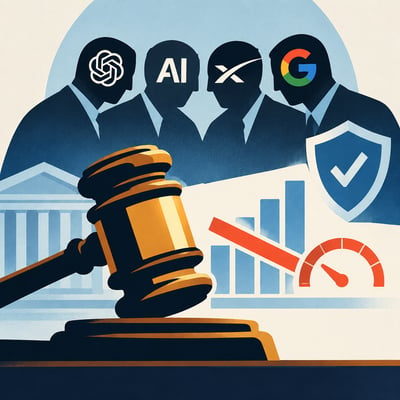
AI safety measures can involve shared standards, outside evaluation, or limits tied to a system’s capabilities—but cooperation among competing companies can also raise antitrust concerns.
A proposed subscriber class action in California alleges that Anthropic, OpenAI, SpaceXAI, and Google coordinated to slow development; those allegations remain unproven. The dispute highlights a key distinction between companies making independent safety choices and collectively restraining competition, as well as questions about whether existing law, an explicit exemption, or direct government oversight should govern safety coordination.
If you read one thing
It explains both the lawsuit’s antitrust theory and how a ruling could shape AI safety governance.
Antitrust scrutiny of AI safety coordination
A proposed class action alleges that Anthropic, OpenAI, SpaceXAI, and Google coordinated to slow AI development, putting the boundary between independent safety measures and competitors’ joint restraints under antitrust scrutiny. The allegations remain unestablished; the dispute also raises whether safety coordination may require legal authorization or direct government oversight.
There is no new-member evidence of a material change in the topic since the prior state.
Previously
A proposed nationwide class action in federal court in Northern California alleges Anthropic, OpenAI, SpaceXAI and Google coordinated to slow AI development after public safety discussions. The subscribers bringing the case say the alleged restraint reduced competition and the value of ChatGPT, Claude, Grok and Gemini subscriptions. A central legal question is whether the conduct constituted an agreement among rivals rather than independent safety decisions; the allegations have not been established in court.