
 AI Governance
 Data Centers
 Drones
 Climate
 Privacy
 Bob Dylan

2026 Maine Senate: Featured Story
Coverage from Central Oregon Daily News, North Jersey, and others
Maine Senate Race Leads Per-Capita Ad Spending
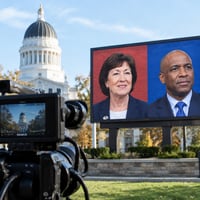
Nearly $218 million in broadcast advertising was earmarked for the 2026 Maine Senate race between Republican Susan Collins and Democrat Troy Jackson, about $160 per resident and the highest per-capita level among competitive Senate contests cited. AdImpact figures show more total spending backing Collins, with outside groups accounting for most spending on both sides. Voters interviewed in Maine described repetitive, often negative ads as exhausting, while the reporting does not establish a broader effect on turnout.
If you read one thing
A comprehensive overview of the record per-capita ad spending, outside-group funding, and voters’ reactions to the campaign’s negative ads.
As of October 31 reporting, the advertising blitz was continuing close to Election Day. The spending and voter complaints are documented, but the coverage does not establish whether the ads changed votes or reduced turnout.
AdImpact data cited in the coverage put planned broadcast spending at nearly $218 million, or about $160 per Maine resident; the figure excludes other formats such as mail, radio, and social media.
More total ad spending backed Collins than Jackson, but outside groups supplied most of the backing for both: $109 million for Collins and $64.4 million for Jackson, compared with candidate spending of $11.9 million and $22.4 million, respectively.
The ads covered issues including healthcare, abortion, taxes, and energy costs, alongside personal and corruption-related attacks. Voters interviewed in Brewer and Gorham described repeated negative ads as exhausting or counterproductive.
A canvasser said some people he encountered found the ads so off-putting that they were considering not voting, but the reporting offers no evidence establishing an effect on turnout or the race's outcome.
Articles in this story are part of a shaping these topics.