
 AI Governance
 Data Centers
 Drones
 Climate
 Privacy
 2026 Maine Senate
 Bob Dylan
Who Controls Nationwide Plate Tracking?
Coverage from The Hip Hop Democrat, Legis1, and others
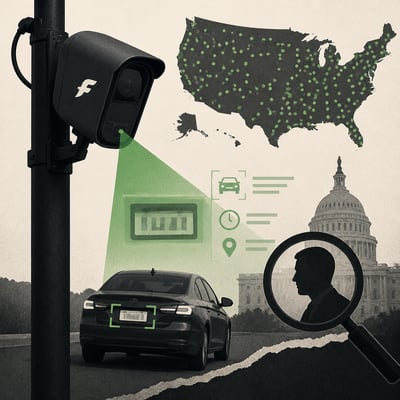
Senator Josh Hawley’s Senate inquiry has focused on Flock Safety’s large automated license-plate reader network and how vehicle-location data is collected, retained, searched, and shared.
The scrutiny has broadened to other surveillance technology companies and proposed restrictions, amid reports of unauthorized searches and inaccurate alerts. The central unresolved issues are what safeguards should govern access to searchable movement data and whether existing policies are sufficient.
If you read one thing
It introduces the network’s national scale and explains how inaccurate alerts and weak access controls create privacy and enforcement risks.
Best explainer
It adds concrete detail on retention changes, planned access safeguards, and the inquiry’s expansion to other vendors.
The local angle
It shows how local governments’ deployment decisions and a specific data-sharing exposure manifest the broader oversight concerns.
Latest development
It covers the proposed Stop Flock Abuse Act, a material new legislative development addressing data use, retention, searches, and security.
National-scale searchable vehicle surveillance
Flock’s network combines plate, location, time, and vehicle details in a searchable system used across jurisdictions. Its reported reach of more than 120,000 cameras in 49 states and over 20 billion monthly scans makes the scale and searchability of movement data a central privacy concern.
Accuracy and access-control failures
Reported false matches, personal searches, and unintended data sharing have been linked to wrongful stops, detention, and exposure of vehicle-location data. Flock has announced shorter default retention for new customers and planned mandatory auditing and automatic lockouts, but existing customers may retain prior settings.
Governmental pushback and oversight
The response has moved beyond records requests: Hawley’s inquiry expanded to competing vendors, a Senate hearing took place, and bills have been introduced. Some local governments have ended or disabled deployments, but the supplied evidence does not establish comprehensive, enforceable privacy protections.
124 searches
searches of the officer’s girlfriend’s license plate
“In Milwaukee, prosecutors charged a police officer who allegedly searched his girlfriend’s license plate 124 times and her former boyfriend’s plate 55 times, using "investigation" as the justification each time.”
161 vehicles
vehicles stopped after being incorrectly flagged as stolen
“The Los Angeles Police Department ended its Flock contract after an audit showed officers had stopped 161 vehicles incorrectly flagged as stolen over two months.”
13 days
length of time the Florida woman spent in jail
“A Florida woman spent 13 days in jail and faced eight felony counts, including three counts of vehicular homicide, after investigators arrested her based on a Flock search for a vehicle description.”
71% percent
Flock alerts found incorrect by one California police department
“One California police department found that 71% of its alerts were incorrect, while the Los Angeles Police Department dropped its Flock contract after an audit showed officers had stopped 161 vehicles incorrectly flagged as stolen over two months.”
eight felony counts
criminal charges faced by the Florida woman
“A Florida woman spent 13 days in jail and faced eight felony counts, including three counts of vehicular homicide, after investigators arrested her based on a Flock search for a vehicle description.”
Hawley introduces legislation to restrict license-plate reader data use
Hawley has introduced a bill proposing limits on automated license-plate reader data use, retention, searches, and security. The proposal makes federal safeguards a concrete legislative initiative, but does not establish that new restrictions have been adopted.
Previously
U.S. lawmakers are examining Flock Safety and competing AI surveillance vendors over searchable vehicle-movement data, access controls, retention, accuracy, misuse, cybersecurity, and possible sharing, while states and cities reconsider deployments.
The current version adds reported wrongful arrests linked to surveillance-system errors, sharpening concerns about the real-world consequences of inaccurate alerts and identifications. Otherwise, it largely confirms the existing scope and direction of the congressional and local scrutiny.
The inquiry gained concrete next steps: Flock shortened its default retention recommendation for new law-enforcement customers, while a Senate subcommittee scheduled a hearing. The updated framing also emphasizes that investigations remain unresolved and have not established definitive company wrongdoing.