
 AI Governance
 Data Centers
 Drones
 Climate
 Privacy
 2026 Maine Senate
 Bob Dylan
UK Expands Facial Recognition and Digital ID
Coverage from Método Viral, Zerohedge, and others
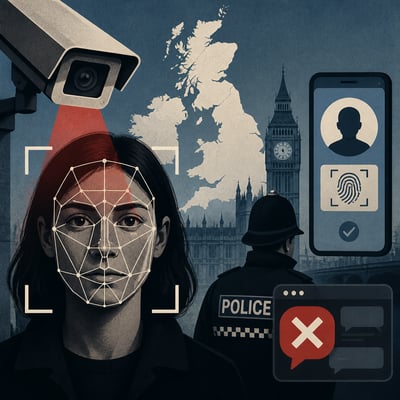
The United Kingdom is expanding or considering several systems that increase state and commercial access to identity and behavioral data, including police and retail facial recognition, online-content controls, policing AI, and digital ID proposals.
Supporters present these tools as measures for public safety, service access, or crisis response, while privacy groups and oversight officials warn that legal safeguards, accountability, and avenues for redress are insufficient. The central unresolved issue is whether fragmented deployments will become standardized through national regulation before their use expands further.
The story is now framed more explicitly as a broader state-and-commercial data expansion, with stronger emphasis on regulatory inadequacy and a new encryption conflict around device-scanning proposals. The central question has shifted toward whether fragmented deployments will be standardized through national rules before they spread further.
The story has sharpened from a broad expansion of surveillance and digital controls into a more specific account of contested implementation, with stronger emphasis on due-process failures, fragmented oversight, and unresolved legal boundaries. The current version also makes clearer that some of the most alarming measures, especially device scanning and mandatory digital ID, are still only proposed or warned about rather than fully in force.