
 AI Governance
 Data Centers
 Drones
 Climate
 Privacy
 2026 Maine Senate
 Bob Dylan
Toyota AI Cameras Raise Privacy Questions
Coverage from Ars Technica, Yahoo, and others
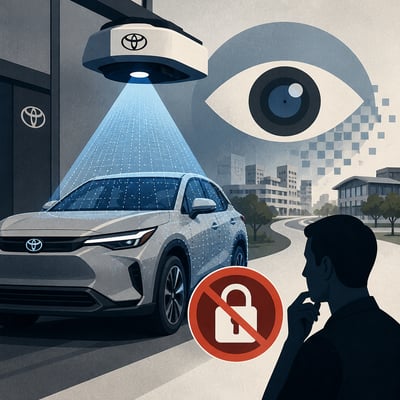
Toyota-linked AI camera systems are drawing privacy questions in two settings: automated vehicle inspections at a Tucson dealership and the densely monitored Woven City testbed in Japan.
The central concerns are whether people receive clear notice, provide meaningful consent, understand how data is stored or shared, and can choose manual or non-participatory alternatives. Toyota and technology providers describe access controls and consent mechanisms, but the available evidence leaves uncertainty about implementation and how well protections would transfer beyond controlled environments.
The story is now framed less as a possible concealed scan and more as a transparency-and-consent issue across two controlled Toyota-linked settings. The current version adds that Toyota and UVeye describe safeguards such as access controls, encryption, and optional manual inspection, though their real-world effectiveness remains uncertain.
The main change is a modest reframing toward broader data-governance concerns: the story now emphasizes cloud storage, access controls, and opt-out clarity alongside the original notice-and-consent issues. The Woven City angle is also slightly sharpened by specifying an AI vision system and ongoing resident-phase monitoring.
The story has shifted from broad privacy concerns to a more specific emphasis on how Toyota-linked camera systems function in practice: dealership scans now appear to have been performed before clear notice, and Woven City’s surveillance stack is described in more technical terms. The new version also strengthens the framing around whether opt-out and consent mechanisms actually give people meaningful control.
The story is reframed from a narrow dispute over one dealership scan into a broader privacy case about Toyota-linked camera systems, adding Woven City’s continuous monitoring and clarifying how the surveillance environment works. The current version also strengthens the claim that the issue is not just notice, but how AI-enabled collection scales across a controlled population with limited opt-out realism.
The topic centers on AI-enabled Toyota-related systems that scan vehicles or monitor activity and the privacy questions they raise. Across the material, the recurring issue is not the existence of the technology itself, but whether people are clearly notified, able to opt out, and informed about where scan data is stored and who can access it. The examples span dealership vehicle inspection and Toyota’s broader Woven City testing environment, linking operational AI use with consent and surveillance concerns.