
 AI Governance
 Data Centers
 Drones
 Climate
 Privacy
 2026 Maine Senate
 Bob Dylan
Surveillance Pricing Faces State Limits
Coverage from KTBS, The Digital Courier, and others
U.
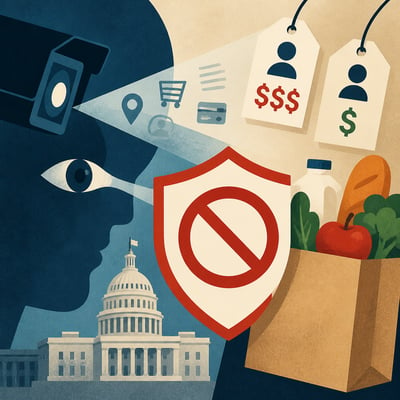
S. lawmakers and regulators are examining pricing systems that combine browsing, purchase, location, loyalty, device, and demographic data to estimate what individual customers may be willing to pay. The practice is drawing concerns about opaque pricing, discrimination, consent, and possible algorithmic coordination, while retailers and business groups argue that algorithmic pricing can improve efficiency or reduce prices. Maryland, Connecticut, and New Jersey have enacted differing restrictions, and federal lawmakers are considering broader safeguards, but the scope of covered practices and acceptable discounts remains unsettled.
The main new development is that Instacart ended retailer pricing experiments following investigations and public scrutiny. Otherwise, the update largely confirms existing concerns while adding that California and other states are considering further restrictions.
The story has moved from proposed restrictions and investigations toward enacted state laws with concrete implementation timelines. A major Senate hearing and new federal legislation proposals also broaden the debate to algorithmic coordination, deceptive discounts, and enforcement design.
- Connecticut enacted broad restrictions and disclosure requirements for data-based price increases.
- State implementation dates now extend from October 2026 through August 2027.
- The Senate Judiciary Subcommittee held a major August 4 hearing on AI-powered surveillance pricing.
- Josh Hawley announced federal legislation targeting AI-powered surveillance pricing.
- Instacart ended retailer price experiments discussed in the reporting.
The story now centers more explicitly on regulatory scrutiny of AI-driven pricing systems, with the FTC and lawmakers pressing for disclosure and limits on profiling-based price discrimination. It also broadens to include privacy advocates and pricing vendors, not just retailers and state bans.
The story has moved from broad concern about personalized pricing to concrete state-level regulation, with Maryland and New Jersey now enacting limits. It also widens beyond grocery retail to encompass electronic shelf labels and AI-driven pricing systems across more retail contexts, while reported practices remain disputed.
- Maryland and New Jersey enacted personalized pricing restrictions.
- The FTC is actively seeking information on pricing algorithms and opt-outs.
- Retailers are deploying electronic shelf labels.
- Airline and online retail examples now broaden the issue.
- Instacart says its practices have changed.
The story shifts from broad state-level and retailer-specific scrutiny to a more concrete federal investigative and legislative push focused on how pricing algorithms use consumer data. The updated framing also broadens the policy debate to explicitly include transparency, competition, and opt-out mechanisms.
The story has broadened from a general state-and-federal push against surveillance pricing into a more concrete regulatory fight, with New York now joining the state-level response and the coverage emphasizing actual bans and disclosure rules rather than just proposed limits. The updated version also gives more weight to retailer denials and guardrails, suggesting the debate is now centered on how identity-based pricing could be controlled in practice.
The story has broadened from a New Jersey-led grocery pricing fight into a wider, more clearly articulated state-federal regulatory campaign against surveillance pricing across grocery and adjacent retail. The latest version also adds clearer evidence of Maryland’s role and a more explicit view that the near-term story is regulatory scrutiny, not proven widespread deployment.
The story has broadened from a state-and-federal anti-surveillance-pricing push into a more active regulatory and oversight campaign, with Congress and the FTC now more explicitly involved. The latest version also adds delivery platforms and AI/third-party data as central targets, not just grocery-store shelf-label pricing.
- Congress and FTC scrutiny are now explicit parts of the story.
- Delivery platforms are newly included alongside grocery retailers.
- AI, machine learning, and third-party data are now named pricing inputs.
- The debate now centers on bans, disclosures, and opt-out rules.
- New Jersey is described as the most visible policy battleground.
U.S. lawmakers and privacy advocates are moving to restrict surveillance pricing in grocery and retail settings, especially when companies use personal data, AI, or electronic shelf labels to set individualized prices. The strongest current signal is legislative action in New Jersey, Maryland, New Hampshire, and in Congress, with debate over scope, exceptions, and enforcement.