
 AI Governance
 Data Centers
 Drones
 Climate
 Privacy
 2026 Maine Senate
 Bob Dylan
States Restrict Automated Plate Reader Data
Coverage from Cowboy State Daily, Police1, and others
Lawmakers in several U.
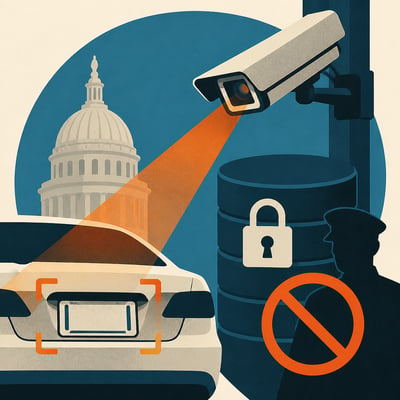
S. jurisdictions are seeking new limits on automated license plate reader systems, particularly how agencies retain, query, and share vehicle-location data across state and federal boundaries. Proposals in Colorado, New Mexico, New Jersey, Wyoming, and Congress vary in scope but commonly aim to preserve selected public-safety uses while preventing data from supporting immigration enforcement, investigations of legal reproductive care, or constitutionally protected activity. The measures reflect a growing policy dispute over whether searchable vehicle records function as location surveillance and how much oversight private technology providers and law enforcement should face.
The story is largely stable, but the current version sharpens the core framing: it now explicitly emphasizes ALPR systems as searchable location-surveillance tools and broadens the policy debate to oversight of private operators as well as police.
The story now extends beyond state-level ALPR privacy limits to include a new federal proposal that would sharply narrow highway-fund recipients’ ALPR use. It also sharpens the legislative picture by naming specific new restrictions in Colorado, New Jersey, and Wyoming, alongside New Mexico’s out-of-state sharing limits.