
 AI Governance
 Data Centers
 Drones
 Climate
 Privacy
 2026 Maine Senate
 Bob Dylan
Post-9/11 Surveillance Expansion
Coverage from Schneier on Security, Stateline, and others
U.
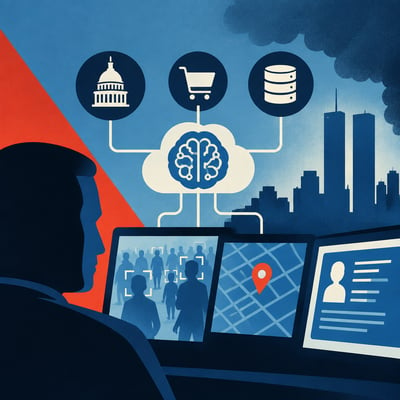
S. surveillance infrastructure built after 9/11 increasingly combines government systems, commercial data, and AI. Information sharing and investigative capacity have grown alongside unresolved oversight, accuracy, and civil-liberties problems.
If you read one thing
It provides the clearest broad overview of how post-9/11 surveillance evolved into an integrated system combining government authority, commercial data, and AI.
Latest development
As the Story So Far driver, it updates the Topic with a forceful account of mass surveillance, private data access, and continuing civil-liberties risks.
The evidence
It adds institutional context by documenting both improved crisis-response capabilities and the unresolved privacy and oversight consequences of post-9/11 reforms.
Government access to commercial data
Post-9/11 surveillance operates through increasingly integrated government, commercial, and analytical systems. Agencies can combine location, communications, behavioral, camera, and other privately collected data with AI to track movements and infer personal behavior.
Shift toward routine mass surveillance
The surveillance model extends beyond targeted terrorism investigations into ordinary policing, immigration enforcement, protest monitoring, and private security. Large-scale access to data can occur without individualized suspicion, challenging traditional Fourth Amendment limits.
Persistent oversight and civil-liberties risks
Expanded surveillance capacity remains paired with unresolved accountability, accuracy, and privacy problems. Improper searches and monitoring, disproportionate scrutiny of marginalized communities, and erroneous AI outputs that may trigger investigations or arrests keep civil-liberties protections unsettled.
Documented abuses sharpen the civil-liberties risks of mass surveillance
New evidence documents improper searches and personal tracking involving activists, journalists, vulnerable people, and political critics, while questioning whether mass surveillance is effective enough to justify its broad access to personal data. The development deepens concerns about constitutional safeguards, misuse, and accountability.
Previously
U.S. surveillance infrastructure built after 9/11 increasingly combines government systems, commercial data, and AI. Information sharing and investigative capacity have grown alongside unresolved oversight, accuracy, and civil-liberties problems.