Immigration Enforcement’s Expanding…Immigration Enforcement’s Expanding Data NetCoverage from WSJ, CNN, and others
00/00/0000
DailyWeekly
U.
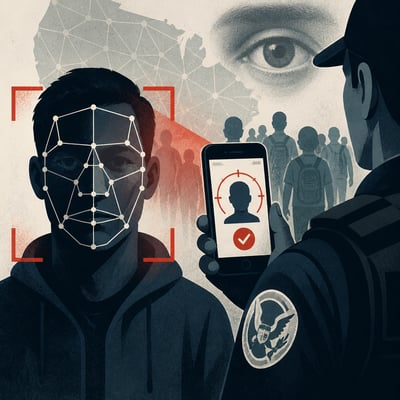
S. immigration agencies are reported to be combining facial recognition, biometric checks, location and vehicle data, government records, and commercial databases to identify and track people. Plans to extend some federal facial-recognition capabilities to local police, alongside reported long-term retention of images and broad data sharing, raise questions about the reach of these systems beyond immigration targets and the safeguards governing their use. Reporting does not consistently establish how often particular tools are used or what controls apply in practice.
Looking Back
238 Day Timeline
Articles published over time. Hover any bar for the period and its article count.
Jan 28
Mar 11
Apr 15
May 27
Jul 1
Aug 12
Sep 16
History
09/30/2026
The updated account more explicitly cautions that reporting does not establish how often tools are used or what safeguards operate in practice. The underlying surveillance concerns and reported plans are otherwise largely unchanged.
08/05/2026
The story is largely reaffirmed, but the current version shifts from describing broad surveillance expansion to emphasizing more concrete operational details: contactless fingerprint collection, 15-year retention of biometric data, and a more explicit push to extend facial-recognition access to local police. The framing also slightly broadens to include geofencing and commercial data-broker information as part of the linked surveillance stack.
DHS and ICE expand domestic surveillance for immigration enforcement using data-linking apps, biometrics, and phone and messaging exploitation amid federal legal challenges.
5/1/2026 • Data Collection & Surveillance Practices • General
Recent reporting shows DHS authorities deploying Mobile Fortify facial recognition in field operations by ICE and CBP, raising privacy concerns and prompting calls for transparency.
2/24/2026 • Data Collection & Surveillance Practices • General
DHS privacy review describes ICE Task Force Module, a facial recognition mobile app enabling local police to match faces against large government datasets with 15-year retention.
6/19/2026 • Data Collection & Surveillance Practices • General
Investigations in the 2020s reported that third-party SDKs and commercial brokers supply mobile location data used for U.S. immigration and military surveillance.
6/13/2026 • Data Collection & Surveillance Practices • General
George Washington University privacy experts warn that expanding commercial data collection and AI-enabled government surveillance in the United States are exceeding existing legal safeguards.
9/1/2026 • Data Collection & Surveillance Practices • General
A 404 Media leak describes DHS ICE and CBP access to brokered cell-location data, Clearview AI facial recognition, and license-plate and geolocation tracking tools.
7/28/2026 • Data Collection & Surveillance Practices • General
TSA Secure Flight passenger data and photographs were reported as shared with ICE between 2017 and February 2026, contributing to hundreds of arrests at major U.S. airports.
7/28/2026 • Data Collection & Surveillance Practices • General
In May 2026, the Pentagon pursued AI deployments on classified networks while courts and policy debates continued over warrants for purchased location and communications data.
7/21/2026 • Data Collection & Surveillance Practices • General
Ramirez and Johnson led a congressional hearing on ICE technology for mass surveillance, citing Palantir contracts and DHS biometric data systems and calling for safeguards and funding limits.
7/15/2026 • Data Collection & Surveillance Practices • General
DHS and ICE plans to expand the Task Force Module facial-recognition system to about 1,300 local police agencies, with 15-year federal photo retention.
7/10/2026 • Data Collection & Surveillance Practices • General
ICE expands interior immigration checkpoints and surveillance technology across U.S. cities, using profiling and location-tracking tools to demand identity proof away from borders.
7/9/2026 • Data Collection & Surveillance Practices • General
DHS Privacy Threshold Analysis describes ICE Task Force Module facial recognition for local police immigration enforcement using federal identity databases and 15-year storage.
6/19/2026 • Data Collection & Surveillance Practices • General
The Secret Service tests the Sentry smartphone biometric app for threat identification, using AI face and fingerprint matching, amid concerns raised over privacy and consent practices.
6/15/2026 • Data Collection & Surveillance Practices • General
DHS officials and an April 21 ICE letter described retention of biographic and biometric identifiers collected during protest and observer encounters in the 2020s.
6/10/2026 • Data Collection & Surveillance Practices • General
In Portland, Maine, NPR reviewed ICE and DHS documents indicating collection of biographic and biometric data about protesters and observers during immigration-related enforcement actions.
6/10/2026 • Data Collection & Surveillance Practices • General
NPR reported that ICE acting director Todd Lyons signaled collection and retention of biographic and biometric information on protesters and observers in the U.S., despite denials of a protest database.
6/10/2026 • Data Collection & Surveillance Practices • General
Advocacy leaders called for ICE to cancel the Edge Ops LLC Project SAFE HAVEN contract in the United States after reports of AI patterns of life surveillance.
5/28/2026 • Data Collection & Surveillance Practices • General
DHS is scheduled to receive $7.5 million in fiscal year 2027 funding to develop AI smart glasses for real-time biometric identification, with critics warning of broader surveillance implications in the USA.
5/20/2026 • Data Collection & Surveillance Practices • General
ICE awarded Edge Ops a $12.2 million no-bid contract for Project SAFE HAVEN to track immigrants' routines and real-time locations, amid allegations of vendor website fabrications reported by The Lever.
5/13/2026 • Data Collection & Surveillance Practices • General
ICE used biometric and geofencing tools, including Mobile Fortify and Penlink, in immigration enforcement while drawing criticism under Fourth Amendment precedents.
5/12/2026 • Data Collection & Surveillance Practices • General
ICE and CBP use Mobile Fortify and Penlink for biometric and geofence tracking, according to privacy research and reporting amid concerns about mission creep and oversight.
5/12/2026 • Data Collection & Surveillance Practices • General
During immigration protests in Minneapolis and other U.S. cities, federal immigration enforcement and related vendors reportedly used biometric and license plate reader surveillance, raising Fourth Amendment and data-broker concerns.
5/10/2026 • Data Collection & Surveillance Practices • General
Georgetown Law Center research and reported contracts describe how ICE surveillance tools used for immigration enforcement expanded into identification and location tracking of Americans and protesters.
5/6/2026 • Data Collection & Surveillance Practices • General
DHS surveillance systems using Palantir ELITE and facial recognition tools have expanded immigration enforcement as Congress seeks details on data integrations and safeguards.
5/3/2026 • Data Collection & Surveillance Practices • General
Federal AI surveillance funding, DHS biometric expansions, and FBI data broker purchases in the USA raise privacy oversight concerns as enforcement frameworks lag.
4/28/2026 • Data Collection & Surveillance Practices • General
Data broker markets could enable faster government or corporate analysis using LLM agents, following failed Anthropic and US Department of Defense contract talks in late February over US citizens data use.
4/27/2026 • Data Collection & Surveillance Practices • General
US intelligence agencies in 2025 formalize AI-enabled purchases of commercial data broker records, enabling warrant-bypassing access for behavioral profiling.
4/22/2026 • Data Collection & Surveillance Practices • General
Since 2012, Seguritech expanded Plataforma Centinela surveillance in Mexico and, after an April 2022 Texas-Chihuahua memorandum, enabled Texas access to Centinela vehicle-tracking data and intelligence sharing.
4/16/2026 • Data Collection & Surveillance Practices • General
ICE awarded Edge Ops LLC a $12.2 million contract in 2020s procurement for Project SAFE HAVEN, an AI tool using passive location data to profile immigration targets.
4/15/2026 • Data Collection & Surveillance Practices • General
The federal government expands AI surveillance investment while oversight decreases as data from everyday devices is brokered and analyzed for predictive inferences in the USA.
4/23/2026 • Data Collection & Surveillance Practices • General
DHS disclosed a Privacy Threshold Analysis for the ICE Task Force Module, enabling local police facial scans against 250M records with 15-year photo retention.
6/19/2026 • Data Collection & Surveillance Practices • General
DHS awarded BI2 Technologies a $25 million no-bid contract to expand iris scanning for immigration enforcement and identity verification, prompting privacy concerns about stored biometric databases.
5/27/2026 • Data Collection & Surveillance Practices • General
DHS requested $7.5 million to develop smart glasses for ICE real-time biometric identification, while the ICE Out of Our Faces Act would ban ICE and CBP facial recognition.
5/12/2026 • Data Collection & Surveillance Practices • General
In May, a Trump administration National Drug Control Strategy proposes AI and medical-record scanning for overdose and trafficking enforcement, drawing privacy and discrimination criticism.
5/11/2026 • Data Collection & Surveillance Practices • General
ICE acting director Todd Lyons confirmed Graphite spyware and biometric tools are used by HSI inside the United States, prompting congressional civil liberties concerns.
4/9/2026 • Data Collection & Surveillance Practices • General
DHS plans to hire contractors for AI-assisted skip tracing to support ICE arrests, a process criticized for opaque data sources and disputed accuracy safeguards.
4/6/2026 • Data Collection & Surveillance Practices • General
In Minnesota, ICE and CBP are using facial recognition, mobile tracking tools, and commercial data broker records to conduct expansive, largely warrantless immigration surveillance across communities.
1/28/2026 • Data Collection & Surveillance Practices • General
Courts in multiple US states are allowing police to access Flock Safety AI license plate reader searches without warrants amid limited privacy regulation.
4/29/2026 • Data Collection & Surveillance Practices • General
ICE agents used DHS Mobile Fortify facial recognition during warrantless detentions of farm workers in Oregon, with court testimony and ACLU warnings highlighting false-match privacy risks in 2025.
DOJ sued five states and Philadelphia during the Trump administration over ICE officer identification laws, citing facial-recognition and doxing risks tied to ICESpy.
7/22/2026 • Regulation, Law & Enforcement • General
The Trump administration is expanding surveillance-related capabilities in the United States, raising concerns that tracking and profiling systems could target protesters, journalists and other groups.
7/31/2026 • Data Collection & Surveillance Practices • General
In the United States during 2025, the Trump administration and allied local police agencies were alleged to expand ICE-linked surveillance and immigration enforcement that tracked communities and threatened constitutional rights.
7/30/2026 • Data Collection & Surveillance Practices • General
Laura Poitras filmed Hong Kong meetings with Edward Snowden in June 2013, revealing NSA mass surveillance programs and triggering Espionage Act charges and asylum in Russia.
7/28/2026 • Data Collection & Surveillance Practices • General
Minneapolis residents organized against Operation Metro Surge after alleged ICE and DHS surveillance and shootings, coordinating with encrypted Signal alerts.
7/27/2026 • Data Collection & Surveillance Practices • General
An explainer assesses how the Trump Administration increases beyond-targeted sharing toward government data consolidation, raising personal privacy, surveillance, and cybersecurity risks.
7/24/2026 • Data Collection & Surveillance Practices • General
Privacy advocates and courts debate how Fourth Amendment limits and federal privacy statutes apply to ICE biometric and data broker-based surveillance.
7/16/2026 • Data Collection & Surveillance Practices • General
Josh Ackley argues that ICE shootings in Maine and Houston reflect broader growth in facial recognition, biometric records, and inter-agency data sharing in immigration enforcement.
7/13/2026 • Data Collection & Surveillance Practices • General
A U.S.-focused analysis argues ICE checkpoint operations within a 100-mile border band use biometric and location-based surveillance while weakening Fourth Amendment protections.
7/9/2026 • Data Collection & Surveillance Practices • General
ICE interior immigration checkpoints expand stops and identity demands within a U.S. hundred-mile zone while related surveillance technologies collect location data.
7/8/2026 • Data Collection & Surveillance Practices • General
Randall Travel Award Missouri Insights / Ethan Brooks66
Surveillance examples from physical infiltration to PRISM, facial recognition, and Stingrays highlight contested privacy and civil-liberties tradeoffs under evolving legal standards.
7/4/2026 • Data Collection & Surveillance Practices • General
After September 11, 2001, US emergency policies expanded surveillance through the USA PATRIOT Act, fusion centers, and facial recognition, weakening privacy safeguards.
6/26/2026 • Data Collection & Surveillance Practices • General
US surveillance reporting highlights national security statutes, FISA Section 702 collection practices, and international cooperation under Five Eyes amid concerns over privacy and civil liberties.
6/20/2026 • Data Collection & Surveillance Practices • General
House Homeland Security Committee leaders sent an information request to ICE about a $12 million Edge Ops LLC contract for Project SAFE HAVEN location tracking.
5/21/2026 • Data Collection & Surveillance Practices • General
Daily Memo reports more than 80,000 Flock cameras and new Los Angeles and Anaheim surveillance tools in California are sharing vehicle data used for ICE targeting.
4/30/2026 • Data Collection & Surveillance Practices • General
ICE shootings in Maine and Houston are discussed alongside immigration database expansion using facial recognition, location data, and commercial data broker sources.
7/13/2026 • Data Collection & Surveillance Practices • General
U.S. immigration agencies are combining government and commercial records with AI and biometric tools to identify and track people, as described at a Sept. 10 San Francisco panel.
9/22/2026 • Data Collection & Surveillance Practices • General
DHS-led federal agencies are contracting for AI surveillance tools, including airport facial recognition and CBP biometric scanners, expanding intrusive identity checks at U.S. ports of entry.
4/26/2026 • Data Collection & Surveillance Practices • General
ICE increased raids and arrests in multiple U.S. cities while using facial recognition technology to scan thousands of immigrants and protesters, raising warrantless-search and database concerns.
7/8/2026 • Data Collection & Surveillance Practices • General
ICE deployed 100 to 150 agents at U.S. airports during prolonged TSA wait times, while Border Patrol location-data purchases and FISA Section 702 reauthorization concerns raised privacy risks.
3/25/2026 • Data Collection & Surveillance Practices • General
President Trump signed a $70 billion immigration enforcement funding bill, while privacy concerns focus on ICE body cameras, facial recognition use near New Jersey detention facilities, and potential protester data collection.
6/11/2026 • Data Collection & Surveillance Practices • General
In Minneapolis during federal immigration enforcement in 2017-2018, residents coordinated monitoring using Signal after reports of surveillance, masked detentions, and ICE shootings.
7/27/2026 • Data Collection & Surveillance Practices • General
The United States expanded post-9/11 surveillance and counterterrorism authorities, raising ongoing privacy and oversight concerns as AI and biometric identification advance.
7/4/2026 • Regulation, Law & Enforcement • General
Immigration enforcement expansion in the US couples interior checkpoints with identity and location surveillance technologies, supported by federal funding and supported by recent court interpretations.
7/3/2026 • Data Collection & Surveillance Practices • General

 AI Governance
 Data Centers
 Drones
 Climate
 Privacy
 2026 Maine Senate
 Bob Dylan