
 AI Governance
 Data Centers
 Drones
 Climate
 Privacy
 2026 Maine Senate
 Bob Dylan
Data Breaches Fuel Delayed Identity Fraud
Coverage from JD Supra, FreezeReports.com, and others
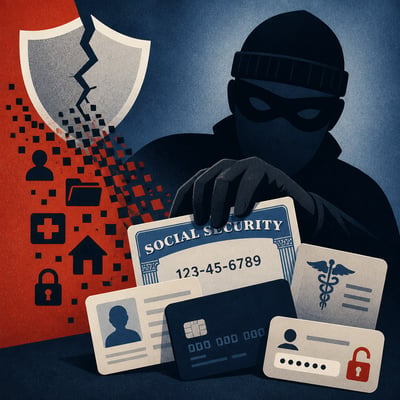
The topic centers on how stolen personal information and credentials can remain useful to criminals long after a breach, enabling account takeover, new-account fraud, social engineering, and credit damage.
Reports describe large-scale exposure across financial services, education, background-check databases, and cloud storage, while guidance emphasizes password changes, multifactor authentication, passkeys, credit freezes, and ongoing monitoring. The material also highlights that breach notices and time-limited monitoring may not match the potentially long delay between data exposure and fraud.
The story now places more emphasis on delayed fraud and the limits of short-term monitoring, rather than just persistent reuse of breached data. It also broadens the set of affected systems to include cloud storage and data-aggregator environments, while adding knowledge-based identity checks as a failure point.
The story has broadened from a 2026 breach-notice surge and delayed identity-fraud risk into a more explicit account of how stolen data is reused over time, with emphasis on credential stuffing, account takeover, and longer-lived fraud tied to older breaches. It also adds new institutional references and response tools, including credit bureaus and Have I Been Pwned, while shifting the guidance toward sustained monitoring and stronger authentication.
- Older breach data is being aggregated, resold, and reused in later fraud operations.
- Credential stuffing is newly identified as a key attack method.
- The FTC and credit bureaus are newly referenced response resources.
- The 2024 National Public Data breach is now a specific example.
- Short-term monitoring may miss fraud that appears years later.
The story now has a much sharper scale: 2026 breach-notice totals are far larger than previously indicated, driven mainly by a massive Canvas-related incident. The framing also shifts from general exposure risk to a more concrete warning about insider misuse and vendor/authentication weaknesses fueling identity fraud.
- ITRC estimated 471.2 million breach notices in first-half 2026.
- Canvas accounted for an estimated 275 million notices.
- Insider-related incidents increased sharply in ITRC reporting.
- Vendor access and employee privileges are recurring exposure pathways.
- Breach guidance now stresses passkeys and credit freezes.
The story has narrowed from a broad set of breach and leak cases to a more specific focus on identity-system compromise, especially DHS’s HSIN investigation and social-engineering-driven access to cloud environments. It also adds stronger uncertainty around several incidents, emphasizing disputed scope and incomplete confirmation.
The story has shifted from broad breach fallout to a more specific pattern of named incidents involving government, enterprise, and extortion actors. It now emphasizes cloud and collaboration-system access paths, plus the fact that some leak claims remain unverified while still driving risk.
- DHS is investigating a compromise of the Homeland Security Information Network.
- ADT reported unauthorized access and a related leak claim.
- Deutsche Bank was named in a ransomware leak-site claim.
- ShinyHunters and Unsafe are now identified as threat actors.
- Some current leak claims remain unverified.
The story broadens from a general account of recycled breach data into a more consumer-facing guidance piece, with new emphasis on specific remediation steps and named institutions involved in recovery. It also adds fresh examples of recent exposures and third-party failures, showing the problem is still active across multiple channels.
The story becomes more concrete by tying the long-term risk to aggregated datasets from older breaches, including a newly highlighted exposure that was validated and removed after notification. This strengthens the interpretation that breach data is actively recombined and remains exploitable, rather than merely lingering passively.
This topic centers on how breached personal data continues to drive identity theft long after an incident is disclosed. The material focuses on the practical limits of free credit monitoring, credit freezes, and self-service recovery tools, while comparing them with paid identity protection services and broader monitoring. It also shows how exposed Social Security numbers, addresses, health data, and login credentials can be reused for fraud, account takeover, and impersonation across sectors.