
 AI Governance
 Data Centers
 Drones
 Climate
 Privacy
 2026 Maine Senate
 Bob Dylan
Healthcare Data Breaches Hit Patients
Coverage from PMBAUSA, Paubox, and others
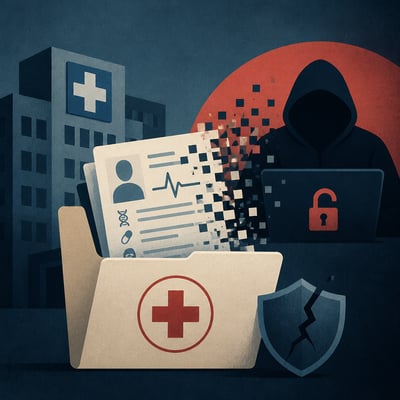
Healthcare organizations and service providers are reporting breaches that expose combinations of patient identities, medical histories, insurance details, and financial information.
The incidents range from credential compromise and social engineering to ransomware-linked intrusions and unauthorized access to third-party storage or billing systems, with the largest disclosed case affecting more than 1.26 million people through MCBS. The disclosures also show continuing exposure beyond hospitals, including medical equipment suppliers, law firms, insurers, and business associates, followed by credit-monitoring offers, regulatory reporting, and proposed litigation.
The story now emphasizes post-breach consequences and more specific attack methods, including social engineering, credential compromise, credit-monitoring offers, and proposed litigation. PEAR and ShinyHunters claims are further detailed as alleged large-scale publication or exfiltration, though some claims remain unverified.
The story expands with several newly named incidents and a clearer emphasis on the breadth of affected healthcare-adjacent organizations, not just core providers. It also adds a notable outlier: the Fairlife ransomware case, which is framed as extending the cluster beyond healthcare into operational disruption and alleged theft.
The story now extends beyond provider and billing breaches to include law firms, medical suppliers, and third-party storage platforms, with several incidents tied to ransomware or extortion claims. It also sharpens the timeline by showing that discovery and notification often lagged intrusion by months.
- Law firms and medical suppliers are now included among affected service vendors.
- Third-party file-storage and archived files are identified as exposure points.
- Several cases now feature explicit ransomware or extortion claims.
- Discovery and notification delays are described as lasting months.
- MCBS is described as affecting seven healthcare organizations.
The story has shifted from a general pattern of recurring healthcare breaches to a more specific and higher-volume view centered on vendor concentration and large-scale incidents. The updated version also adds stronger evidence that ransomware now often includes theft-and-extortion behavior and that multiple attack paths are recurring across providers and vendors.
- 772 large healthcare breaches were reported in 2025.
- MCBS breach affected 1,261,464 people.
- Billing, cloud, and practice-management vendors are recurring exposure points.
- Ransomware increasingly includes data theft and extortion claims.
- Attack pathways now include compromised credentials and unpatched systems.
The story has broadened from a few notable healthcare intrusions into a wider pattern of repeated breaches across hospitals, medical groups, and outside vendors, with more emphasis on notification delays and formal compliance reporting. The new version also shifts the focus toward the recurring remediation playbook and the persistence of high breach volume.
The story broadens to include additional healthcare entities and shifts from isolated breach reports to a wider pattern of compromised accounts, data exfiltration, and extortion activity across healthcare vendors and providers. The updated version also adds more explicit emphasis on vendor-held data concentration and response measures while scope remains unresolved.
The story has sharpened from a broad pattern of healthcare privacy breaches to specific, ongoing incidents at Clover Health, Craneware, and Medtronic, including a named threat actor claim in the Medtronic case. The new version also adds uncertainty around the final scope, with investigations still underway and record counts disputed.
- Clover Health said social engineering compromised three employee accounts.
- Craneware reported exfiltration of customer, employee, and partner data.
- Medtronic notified millions after unauthorized access to corporate systems.
- ShinyHunters claimed responsibility for the Medtronic breach.
- Medtronic said its medical devices remained safe to use.
The story has broadened from a general pattern of healthcare breaches to a more specific account of vendor-driven exposure, with added emphasis on ransomware, email compromise, and resulting legal/regulatory fallout. It also now suggests a subtle trend change: breach volume remains high, but the number of affected individuals may be easing in 2025 versus 2024.
- Vendor incidents are a major source of downstream exposure.
- Email compromise and social engineering remain persistent access paths.
- Some breaches have led to class-action claims.
- 2025 incidents may have fewer affected individuals than 2024.
- Health insurers and software vendors are now clearly included.
This topic centers on data breaches and cyber incidents across the healthcare sector, including hospitals, specialty practices, medical-device companies, and related service providers. The repeated pattern is unauthorized access to corporate or clinical systems followed by disclosure of exposed personal, medical, and insurance data, often alongside extortion claims and formal notification to regulators and affected individuals. It matters because healthcare records contain highly sensitive information and the incidents can create long-tail risks for identity theft, fraud, and patient trust even when core operations are not disrupted.