
 AI Governance
 Data Centers
 Drones
 Climate
 Privacy
 2026 Maine Senate
 Bob Dylan
Healthcare Breaches Trigger Patient Lawsuits
Coverage from Paubox, DistilINFO, and others
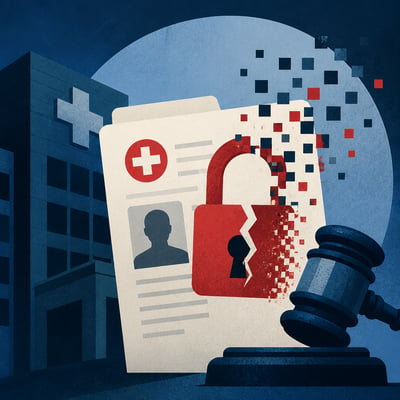
Healthcare providers and related service organizations are reporting unauthorized access to systems and third-party platforms that may expose protected health information, Social Security numbers, insurance records, and financial data.
The incidents are generating patient notifications, credit or identity-monitoring offers, regulatory attention, and proposed class-action lawsuits, with some cases progressing to settlements. The material highlights the extended consequences of healthcare breaches and continuing disputes over security safeguards, vendor oversight, and the timing and completeness of disclosures.
The story now places more emphasis on active legal and remediation responses, including monitoring offers, regulatory attention, and at least one settlement, rather than primarily describing breach exposure and delayed notice. It also shifts the cast toward specific providers and vendors tied to unauthorized access incidents.
The story has broadened from a handful of disputed breach cases into a larger, more uniform pattern of healthcare-sector incidents tied to delayed notice, vendor weaknesses, and escalating class-action and regulatory fallout. It also adds a new privacy-practice dispute over appointment-tracking tools allegedly sharing patient data with ad-tech firms.
- Bayada Home Health Care faces multiple class actions over a reported 550,000-person intrusion.
- Penobscot Valley Hospital faces scrutiny over delayed patient-notification after suspected exposure.
- Ohio regulators are investigating an exposed database containing medical cannabis patient records.
- The story now includes proposed settlements and consolidated healthcare breach litigation.
- A Tennessee suit alleges appointment trackers shared patient data with Google and advertisers.
The story now centers more clearly on a broader set of breach vectors and a more specific mix of disputed claims, with new emphasis on social engineering, compromised accounts, and external systems. It also adds Southern Illinois Dermatology and Amazon as relevant actors, while reinforcing that several attackers’ volume claims remain unverified.
The story now includes several new named incidents and actors, with the emphasis shifting from a broad healthcare breach pattern to specific investigations, alleged extortion, and lawsuits around disputed breach scope. Abbott and One Medical’s reported incidents, plus Blank Rome’s class actions, make the uncertainty over actual impact and disclosure timing more central.
- Blank Rome faces proposed class actions over an alleged client-data exposure.
- Abbott and One Medical are under investigation for alleged breaches.
- ShinyHunters claims access to Abbott and One Medical data.
- Southern Illinois Dermatology is linked to a reported breach affecting about 160,000 people.
- Some breach-size and data-theft claims remain unverified.
The story has broadened from a general run of healthcare breach disclosures into a denser, more litigation- and compliance-focused pattern, with regulators now part of the framing. The current version also makes vendor compromises, phishing, unsecured databases, and delayed or incomplete notifications more explicit recurring issues.
- Regulators and breach-reporting agencies are now identified as active actors.
- Unsecured databases and compromised file-transfer workflows are newly highlighted breach vectors.
- Disclosure timing and completeness are now recurring issues.
- The current framing stresses compliance consequences alongside lawsuits and settlements.
The story is now framed around specific organizations and concrete consumer remedies, including a named settlement, rather than primarily broad breach patterns and regulatory involvement. The underlying breach-and-litigation cycle remains confirmed, with no change in article volume.
The story broadens modestly beyond healthcare-only breaches to include workforce data and highlights the scale of several incidents, including exposures affecting hundreds of thousands or more than one million people. The underlying breach-notification, regulatory, and litigation cycle remains consistent.
The story has broadened from a single reported breach at North East Medical Services to a wider pattern of healthcare data breaches across multiple organizations and states. The new framing emphasizes recurring vendor compromise, ongoing regulatory scrutiny, and a growing pipeline of class actions and settlements.
- Multiple healthcare organizations disclosed unauthorized access between 2024 and 2026.
- Vendor and hosted service providers are repeatedly implicated in the incidents.
- Several cases have progressed into class action investigations or settlements.
- Regulatory scrutiny now includes HHS OCR and SEC disclosure issues.
- The breach pattern spans multiple states, including West Virginia and California.
North East Medical Services is facing scrutiny after a reported data breach involving patient information, with possible legal action emerging in response. The core issue is the exposure of sensitive healthcare data and the organization’s handling of notification, remediation, and liability risk. The topic remains centered on the breach itself and the downstream legal and operational consequences.