
 AI Governance
 Data Centers
 Drones
 Climate
 Privacy
 2026 Maine Senate
 Bob Dylan
Flock’s Camera Safeguards Face Scrutiny
Coverage from Arkansas Online, Richard Hanania, and others
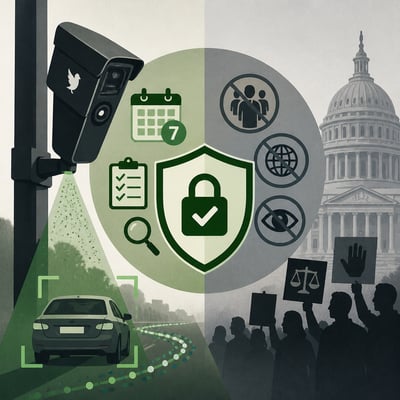
Flock Safety is changing recommended retention and access controls for its automated license plate reader network amid civil-liberties criticism, reported misuse, contract disputes, and lawsuits.
State officials and lawmakers are also examining how these systems should be governed, while courts consider whether aggregated vehicle-location data receives Fourth Amendment protection. The central unresolved issue is whether company and local safeguards can meaningfully limit surveillance and misuse, or whether enforceable legal limits are needed.
Local pushback is now reflected in Massachusetts municipalities pausing or ending programs, while Arizona’s attorney general has announced a statewide review. These updates make existing local and state scrutiny more concrete, rather than changing the broader privacy debate.
The story now includes an active Texas policy debate as local camera deployments expand and renew, broadening the dispute beyond existing litigation and Arizona’s review. Most other developments, including Flock’s controls and the Virginia, California, and Arizona scrutiny, are confirmations.
The story has moved beyond Flock’s recommended safeguards to concrete government and police responses. Milwaukee imposed additional search and sharing restrictions after misuse reports, while Arizona advanced its scrutiny into a statewide review.
The current version largely confirms the prior account without introducing a material new development. It slightly sharpens the framing around constitutional protection for aggregated vehicle-location records.
The story gains a new misuse dimension: reports that officers monitored former partners using surveillance systems intensified concerns about access controls and law-enforcement oversight.
The story now includes Flock’s apology for misuse and a broader regulatory picture: at least 23 states regulate automated license plate readers, while federal limits remain unsettled. This strengthens the focus on formal legal and policy safeguards beyond company-level controls.
The story now includes a formal statewide Arizona review, broadening the response beyond local cancellations and litigation. Flock’s safeguards are also framed more as implemented controls than proposed measures, while the core privacy and constitutional dispute remains unchanged.
Local backlash is now quantified as accelerating, with more than 50 communities or agencies rejecting, suspending, canceling, or deactivating systems and 214 cancellations reported since 2021. At the same time, Flock says new partnerships still outpace nonrenewals, underscoring continued expansion despite customer retreat.
The story now emphasizes concrete consequences of alleged misuse—arrests, audits, and official reviews—while Flock continues expanding deployments despite the backlash.
The story shifts from emphasizing Flock’s operational safeguards and legislative backlash to highlighting constitutional litigation and named civil-liberties challengers. It also identifies concrete customer opposition, while presenting the seven-day retention change as a recommendation rather than an already completed reduction.
Flock Safety is tightening controls on its automated license plate reader network after allegations of police misuse, inaccurate alerts, broad data access, and persistent vehicle tracking. The company has reduced standard retention to seven days, added case-code and audit requirements, limited some external searches, and introduced automatic suspensions, while preserving longer retention for active investigations. The changes have not ended opposition: communities are canceling deployments, lawmakers are proposing warrant and access restrictions, and civil liberties groups continue to challenge the scope of the system.