
 AI Governance
 Data Centers
 Drones
 Climate
 Privacy
 2026 Maine Senate
 Bob Dylan
Flock Data Misuse Tests Police Controls
Coverage from WWNY, ABC13 Houston, and others
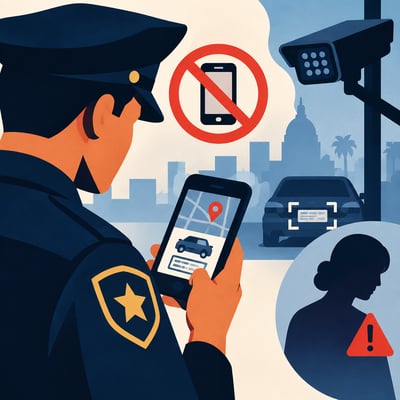
San Jose police fired an officer for using a personal phone to access Flock automated license plate reader data and sharing a vehicle location with a relative involved in a domestic violence case.
The department barred personal-device access and began considering or testing additional auditing controls, while questions remain about whether existing criminal laws adequately address misuse by authorized database users. The incident also highlights broader challenges to San Jose’s ALPR practices, including disputes over retrospective movement tracking and data retention.
If you read one thing
It clearly connects the officer’s misconduct to legal accountability gaps, retrospective tracking risks, and San Jose’s attempted safeguards.
The evidence
It provides direct reporting on the firing, the department’s control changes, and the possible limits of existing criminal law.
Accountability gap for authorized misuse
The firing showed that authorized access to sensitive ALPR data can enable improper disclosure and personal surveillance. Existing criminal statutes may not clearly cover misuse of Flock data, leaving accountability dependent largely on internal discipline.
Controls are tightening but remain contested
San Jose has barred personal-device access, tested auditing tools, and shortened reported plate-data retention from one year to 30 days. Privacy advocates argue these measures do not resolve warrant, access, or enforcement concerns.
Retrospective location surveillance remains the central privacy risk
Stored ALPR data can enable personal tracking, including of a domestic-violence accuser, while San Jose’s nearly 500 cameras expand the system’s reach. Civil-liberties groups are challenging warrantless retrospective searches and warning of broader mass-monitoring abuses.
30 days
San Jose plate-data retention period
“In March, the council unanimously approved a policy reducing the retention period for plate data from one year to 30 days and prohibiting cameras from recording vehicles entering or leaving houses of worship, reproductive health clinics and consulate offices.”
seven days
reduced default retention period available through Flock systems
“Flock later updated its systems to let police agencies reduce the default retention period from 30 days to seven days.”
almost 500 cameras
Flock cameras deployed in San Jose
“San Jose has almost 500 Flock cameras. Some residents questioned how securely the information is handled and expressed concern that the cameras enable mass monitoring, while others said the technology has made the city safer.”
There is no material change since the prior state because no new topic members were supplied.
Previously
San Jose police fired an officer for using a personal phone to access Flock automated license plate reader data and sharing a vehicle location with a relative involved in a domestic violence case. The department barred personal-device access and began considering or testing additional auditing controls, while questions remain about whether existing criminal laws adequately address misuse by authorized database users. The incident also highlights broader challenges to San Jose’s ALPR practices, including disputes over retrospective movement tracking and data retention.