
 AI Governance
 Data Centers
 Drones
 Climate
 Privacy
 2026 Maine Senate
 Bob Dylan
Facial Recognition Wrongful Arrests
Coverage from CNN, The Guardian, and others
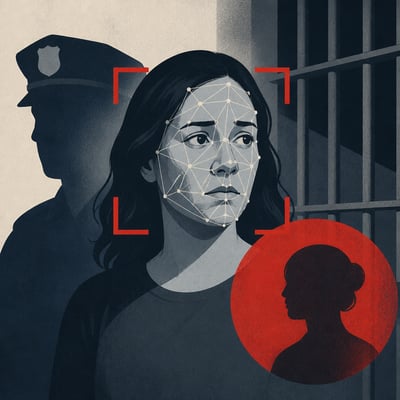
Recent coverage repeatedly shows facial recognition being used as an investigative tool in policing and retail settings, with several cases of misidentification, wrongful detention, and disputed safeguards.
The strongest signal is not technical innovation but accountability pressure around accuracy, human review, bias, and redress.
The story has shifted away from a single wrongful-arrest dispute and now describes facial recognition as a broader investigative practice used across multiple jurisdictions and case types. The new framing emphasizes operational use, corroboration, and victim identification rather than a policy challenge centered on one arrest.
- Facial recognition is now described across multiple investigations, not just one lawsuit.
- Open-source images and public media are central to the identification process.
- FBI and Homeland Security Investigations appear as active users of the tools.
- A child exploitation case includes identifying a victim, not only a suspect.
- The story now includes investigations tied to October 7 attacks and Portland protests.
The story has shifted from a Fargo wrongful-arrest incident involving Angela Lipps to a new Florida lawsuit by Robert Dillon, reframing the issue around whether facial recognition can be used as a decisive basis for arrest. The current version adds a broader legal challenge backed by the ACLU and names multiple agencies and a specific matching system.
- Robert Dillon alleges wrongful arrest in Jacksonville Beach, Florida.
- The reported match was a 93% facial recognition result.
- The complaint cites ignored license-plate-reader and other exculpatory records.
- The Jacksonville Beach, Jacksonville Sheriff's, and Pinellas County agencies are named.
- The ACLU is supporting the lawsuit.
The story now adds that Fargo police acknowledged a mistaken identification process, said they updated training and adopted a new AI policy, and identified the alleged real suspect in New Jersey. That shifts the case from a wrongful-arrest example to a clearer account of how the error happened and how police responded afterward.
- Fargo police said the fake ID photo was mistaken for the real suspect.
- The department implemented staff training and a new AI policy.
- Officials said the actual suspect was later found in New Jersey.
- Lipps says she spent 108 days in jail before dismissal.
The story has shifted from a broad pattern of facial-recognition misuse to a specific, documented wrongful detention case involving Angela Lipps. The new version adds concrete actors, time frame, and consequences, making the risks of AI identification more immediate and personally severe.
- Angela Lipps was wrongly identified in a North Dakota bank fraud case.
- She was arrested in Tennessee and held for months.
- Records showed she was in Tennessee when the crimes occurred.
- Fargo Police and West Fargo Police are now named in the case.
- Clearview AI was involved in the facial recognition identification.
The story has broadened from a single Florida wrongful-arrest lawsuit to a wider pattern of facial recognition-related misidentifications across jurisdictions, with added emphasis on policy reforms and oversight responses. The frame now centers less on one alleged misuse and more on systemic risks, civil rights claims, and law-enforcement rule changes.
- Multiple cases now involve mistaken facial-recognition arrests or detentions.
- Several agencies have reviewed or tightened facial-recognition procedures.
- Bias concerns about Black and Asian false-positive rates are now explicit.
- The geography expands to the United Kingdom, North Dakota, Tennessee, and Arizona.
- The story now includes partner-agency facial recognition systems and vendor involvement.
The story has sharpened from a broader pattern of facial-recognition misidentifications into a specific ACLU lawsuit over Richard Dillon’s alleged wrongful arrest in Jacksonville Beach. The new version adds the named system, the low-quality image basis, and the claim that police failed to pursue exculpatory evidence before arresting him.
- ACLU filed a lawsuit in June 2026.
- FACESNXT generated the disputed facial-recognition match.
- Source images were low-quality, off-axis, and shadowed.
- Police allegedly failed to pursue exculpatory records before arrest.
- Dillon was detained, posted bond, and later had charges dropped.
The story has shifted from a broader UK surveillance and regulation theme to a narrower set of U.S. wrongful-arrest cases where facial recognition is alleged to have directly driven arrests and lawsuits. The new framing emphasizes concrete personal harm, disputed evidentiary value, and growing civil liability rather than general oversight concerns.
- Facial recognition matches allegedly contributed directly to arrests.
- Charges were later dropped after alibi evidence cleared suspects.
- Some cases progressed into civil rights lawsuits.
- Reported harms extended beyond detention to employment and family consequences.
- Specific cases in Jacksonville, Charlotte, and Fort Myers are newly identified.
The story has shifted completely from a Florida facial-recognition wrongful-arrest case to a much broader UK surveillance policy package. The new version emphasizes expanded state use of biometric identification, online content enforcement, policing AI, and digital identity, along with fragmented oversight and civil-liberties concerns.
The story has shifted from a broad pattern of facial-recognition use across unrelated investigations to a specific wrongful-arrest lawsuit in Florida. The key new issue is whether police overrelied on a facial-recognition match and failed to make an independent probable-cause check before arresting Robert Dillon.
- Robert Dillon filed a wrongful-arrest lawsuit over a mistaken facial-recognition match.
- The arrest occurred in 2024; the civil case was filed in June 2026.
- Jacksonville Beach police, Jacksonville Sheriff's Office, and Pinellas County Sheriff's Office are named.
- Pinellas County operates the statewide FACESNXT system.
- ACLU attorneys say the case reflects a wider pattern of wrongful arrests.
The story has broadened from a single wrongful-arrest challenge in Florida to a wider pattern of investigators using facial recognition plus open-source image analysis across multiple serious criminal cases. The new framing emphasizes a recurring investigative workflow and the evidentiary questions it raises, rather than one disputed arrest.
- Facial recognition is now shown being used across multiple unrelated investigations.
- Investigators combined public photos, social media, and metadata with facial matching.
- The October 7 reporting added commercial facial-recognition tools to the workflow.
- Queensland Police and Interpol appear in a child-exploitation identification chain.
- The story now includes a Portland protest assault case involving FBI identification work.
The story has shifted from a Fargo wrongful-arrest episode to a new Florida lawsuit challenging police reliance on facial recognition. The central new issue is whether officers treated a high-confidence biometric match as key evidence despite allegedly available exculpatory records.
- Robert Dillon is now the plaintiff in a Florida wrongful-arrest lawsuit.
- Police allegedly relied on a reported 93% facial-recognition result.
- The complaint says exculpatory license-plate-reader data was overlooked.
- The Pinellas County Sheriff's Office is tied to the disputed facial-recognition system.
- The ACLU is involved in the case.
The biggest update is that the story now includes a police response: Fargo police reportedly changed training and adopted an AI-use policy after the wrongful arrest. The current framing also sharpens the factual dispute by saying the mistake came from treating a fake ID photo as the real suspect, while facial recognition’s role is being questioned.
- Fargo police adopted new training after the arrest.
- Fargo police implemented a new AI-use policy.
- Police said the error involved a fake ID photo mistaken for the suspect.
- Critics questioned facial recognition’s probable-cause weight.
- The city surveillance system allegedly did not use facial recognition as first described.
The story now centers on a specific wrongful arrest case involving Angela Lipps, adding concrete details about the detention, extradition, and personal harm caused by the facial recognition mistake. It also introduces new named actors and strengthens the claim that the failure was driven by overreliance on the software without timely verification.
- Angela Lipps was wrongly linked to the North Dakota bank fraud case.
- She was held without bail during extradition proceedings.
- The case was dismissed after months in custody.
- Exculpatory records showed she was in Tennessee during the crimes.
- Lipps reported losing her home, car, and dog.
The story has broadened from a single wrongful-arrest lawsuit in Florida into a wider pattern of facial-recognition misuse across multiple jurisdictions. It now emphasizes recurring wrongful detentions, policy responses, and civil-liberties concerns rather than one isolated incident.
- Multiple new wrongful-identification cases appear beyond the Jacksonville Beach lawsuit.
- Some cases involved extended detention, extradition, and cross-state consequences.
- Police departments have begun revising procedures and oversight after errors.
- UK agencies and vendors now enter the story, including Thames Valley Police and Home Office guidance.
- Civil liberties groups are using these cases to press for transparency and limits.
The story has sharpened from a broader pattern of facial-recognition wrongful arrests into a specific ACLU-backed lawsuit over Richard Dillon’s arrest in Jacksonville Beach. The new version adds concrete allegations about low-quality images, a reported 93% FACESNXT match, and missing corroborating evidence, making the verification failure more specific and legally pointed.
- ACLU-backed lawsuit filed over Richard Dillon's arrest
- FACESNXT reportedly returned a 93% match
- Source images were allegedly low quality and off-axis
- Police allegedly ignored alibi-confirming records
- Incident involved a child-luring investigation
The story has shifted from a broad UK surveillance-and-identity-control theme to a narrower, more concrete set of U.S. wrongful-arrest cases tied to police facial recognition. The key new development is that facial recognition is now being portrayed not as a general civil-liberties concern, but as a direct cause of arrests, detention, and civil-rights litigation when similarity matches are treated as probable cause.
- Jacksonville-area police are the new focal point.
- Jalil Richardson and Robert Dillon are identified as wrongful-arrest cases.
- AI similarity matches allegedly helped trigger arrests and detention.
- Charges were later dropped after custody and personal harm.
- ACLU attorneys are publicly criticizing arrest use of facial recognition.
The story has shifted from a Florida wrongful-arrest facial-recognition case to a broader UK surveillance and digital-control agenda. The new material adds specific policy and enforcement moves across policing, online moderation, and identity systems, with new institutional actors and a stronger emphasis on fragmented oversight.
- The story now centers on UK surveillance and identity controls, not Florida litigation.
- Ofcom is moving toward stronger crisis-based online content enforcement.
- PoliceAI is being used to centralize policing AI tools.
- Digital ID proposals are tied to access and verification systems.
- Retail facial recognition deployments are part of the current scope.
The story has shifted from a broad discussion of facial recognition in varied investigations to a specific wrongful-arrest lawsuit in Florida. The new emphasis is on alleged overreliance on FACESNXT, inadequate follow-up investigation, and the safeguards around police use of facial recognition results.
- Robert Dillon alleges he was wrongly arrested after a FACESNXT match.
- The lawsuit was filed in June 2026.
- Police allegedly failed to pursue available exculpatory evidence.
- Pinellas County Sheriff's Office says FACESNXT is only an investigative tool.
- The filing invokes other alleged wrongful arrests tied to facial recognition.
The story has broadened from a single wrongful-arrest lawsuit into a wider set of cases showing facial recognition and open-source image matching being used across multiple investigations. The new version emphasizes practical investigative use, corroboration methods, and the technology’s reach beyond domestic policing.
- Facial recognition is used across several investigative contexts, not one case.
- Public social media and news images are central identification inputs.
- The FBI helped identify Robert Jacob Hoopes in a protest case.
- Homeland Security Investigations identified an offender and missing victim.
- Open-source tools were used in October 7-related suspect identification.
The story has shifted to a new wrongful-arrest lawsuit in Florida, replacing the prior Fargo case and adding a more specific allegation that police leaned on a weak facial-recognition match despite contrary evidence. The current version also introduces new defendants, a named system, and active ACLU-backed litigation seeking damages and policy changes.
- Robert Dillon is suing over an alleged wrongful arrest in Florida.
- Police reportedly used a 93% facial-recognition match from a poor-quality image.
- The complaint cites license-plate-reader and travel-distance evidence as exculpatory.
- The ACLU is backing the lawsuit and seeking damages.
- FACESNXT / FACES is named as the facial-recognition system involved.
The story shifted from a Florida facial-recognition arrest lawsuit to a new North Dakota case involving Angela Lipps, where a mistaken biometric identification led to a prolonged detention and later policy changes by Fargo police. The current version adds the outcome of dismissal, the involvement of additional agencies and federal arrest execution, and a stronger emphasis on procedural safeguards and oversight failures.
- Angela Lipps was wrongly tied to a Fargo bank fraud case.
- She was detained for roughly 108 days before charges were dismissed.
- Bank records supported her alibi before dismissal.
- Fargo police revised training and AI-use procedures.
- The actual suspect was later reported in New Jersey.
The story now centers on a specific ACLU-backed lawsuit alleging a false arrest after police treated a facial-recognition output as identification, sharpening the legal stakes around how much independent verification officers must do before arresting someone.
- A specific lawsuit alleges Jacksonville Beach police wrongly arrested Richard Dillon.
- Police allegedly relied on low-quality images and a 93% FACESNXT match.
- The complaint says officers failed to pursue corroborating alibi evidence.
- The arrest allegedly caused detention, bond costs, and lasting harm.
- The lawsuit seeks damages and stronger safeguards on AI identification.
The story has broadened from one North Dakota wrongful-arrest case into a larger Jacksonville-area pattern of facial-recognition-related arrests, complaints, and lawsuits. The new emphasis is not just on error, but on ongoing police use of the technology alongside efforts by advocates and plaintiffs to force policy change.
- Jacksonville-area cases now dominate the story.
- Jalil Richardson and Robert Dillon are newly central figures.
- Richardson’s charges were dropped after alibi records confirmed he was in North Carolina.
- Dillon has filed suit seeking accountability and policy change.
- Police agencies publicly defend facial recognition as one tool among several.
The story has narrowed from a broader pattern of facial-recognition misidentifications to a single, more fully developed wrongful-arrest case in North Dakota. New details show the arrest lasted months, the charges were dismissed after alibi evidence placed Angela Lipps in Tennessee, and the incident is now being framed as a concrete due-process failure.
- Angela Lipps was held for months before alibi records showed she was in Tennessee.
- Charges against Lipps were dismissed without prejudice.
- The case caused loss of housing, transportation, and other stability.
- Follow-on reporting suggests possible civil-rights claims.
- Police procedure changes are now being discussed.
The story has narrowed from broad UK surveillance and digital ID concerns to a more specific record of police facial recognition in criminal investigations, with a sharper emphasis on wrongful arrests and evidentiary error. It also adds a notable counterexample where facial recognition helped confirm a long-cold murder suspect when paired with DNA.
- Facial recognition helped identify a long-sought murder suspect in a cold case.
- Authorities in Fargo admitted procedural errors after an AI match misidentified a woman.
- Some police departments added tighter review steps or new oversight rules.
- The story now includes multiple U.S. police cases, not just UK policy concerns.
- The technology is being used alongside DNA in at least one successful identification.
The story has broadened from discrete facial-recognition misuse cases into a wider UK surveillance-policy arc. It now emphasizes coordinated expansion across policing, online speech moderation, and digital ID, with oversight portrayed as fragmented and trailing implementation.
- UK crisis-time moderation powers are being expanded through Ofcom.
- A new national PoliceAI program is centralizing police AI deployment.
- Digital ID plans are tying identity to access and state-linked records.
- Oversight is described as fragmented across multiple agencies.
- The story now includes broader platform speech control, not just facial recognition.
The story has sharpened from general concerns about facial recognition errors into a more specific accountability narrative centered on police and retail uses that produce wrongful detention and disputed safeguards. The updated version also adds new named actors and cases, especially around retail Facewatch deployments and police wrongful-arrest litigation.
The story now places more emphasis on formal responses to facial recognition failures: lawsuits, oversight debates, and agency policies are becoming part of the narrative, not just the mistakes themselves. The underlying pattern of false matches and weak verification remains the same, but accountability has become more central.
The story has shifted from a broad account of facial recognition expansion and controversy to a sharper focus on process failures: false matches are now framed as problems of image quality, retention, corroboration, and redress rather than just bias or privacy in the abstract. The added material also strengthens the counterpoint that police and retailers still view the technology as operationally useful, even as scrutiny intensifies.
The story has broadened from a policing-and-retail false-match problem into a wider surveillance and identity-policy issue. The current version also adds more named cases and shows more explicit remediation after harm, not before it.
Recent coverage shows facial recognition being used operationally by police and retailers, with repeated cases of false matches leading to wrongful stops, arrests, or detention. The strongest signal is not new capability but the gap between deployment, verification, and accountability.