
 AI Governance
 Data Centers
 Drones
 Climate
 Privacy
 2026 Maine Senate
 Bob Dylan
Facial Recognition Identifies Protest Suspects
Coverage from WIVB, Nypost, and others
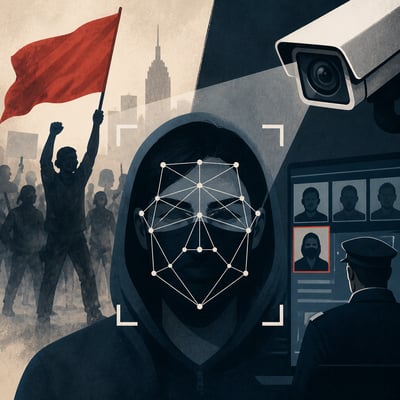
Facial recognition is being used with public photographs, video, social-media profiles, and other digital evidence to identify people in both criminal investigations and politically sensitive protests.
The cases show potential benefits for identifying abuse victims and violent suspects, while also raising questions about accuracy, human verification, due process, and the use of biometric tools against demonstrators. In the reported campus case, the technology produced possible matches rather than independently establishing identity.
The update sharpens the story from a broad account of facial recognition in investigations and protests to a more specific emphasis on corroborated identification: reported matches are now clearly described as leads that require human verification, and the FIU case is framed as yielding only possible matches. It also broadens the cast of investigative actors by naming Queensland Police and Interpol in the child-exploitation case.