
 AI Governance
 Data Centers
 Drones
 Climate
 Privacy
 2026 Maine Senate
 Bob Dylan
Employers Expand AI Worker Surveillance
Coverage from AI & Emerging Tech, UNILAD Tech, and others
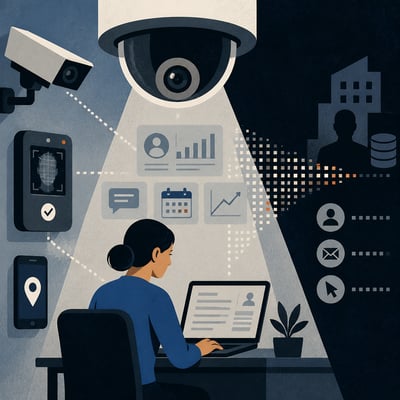
Employers are increasingly using cameras, scanners, software, employer-issued devices, and artificial intelligence to track worker locations, productivity, communications, appointments, and behavior.
Research cited across the reporting indicates that some surveillance applications share names, email addresses, activity records, and other personal information with technology companies and data brokers without clear disclosure. The trend raises practical concerns about worker privacy, autonomy, disciplinary decisions, and the unequal impact on employees with limited bargaining power.
If you read one thing
It provides the clearest and most comprehensive explanation of how AI monitoring turns workplace activity into opaque, career-affecting judgments.
Expanding employer visibility
Employers are using digital tools and AI to observe activity across devices, locations, communications, productivity, and behavior, including during remote work. Worker activity is increasingly converted into employer-observable data for oversight and evaluation.
Opaque data use and sharing
Monitoring data can be repurposed beyond its initial security or productivity rationale, shared with outside technology or data-broker networks, and converted into behavioral scores without clear limits. Uncertainty persists over what is collected, inferred, retained, shared, and used for consequential decisions.
Worker power and accountability gap
AI-generated assessments may affect discipline, scheduling, promotion, compensation, or termination while remaining difficult for workers to understand or challenge. Disclosure, appeal rights, bias testing, human oversight, and emerging legal requirements are the main proposed constraints, but protections vary by jurisdiction and use case.
The new article reinforces existing concerns that AI workplace monitoring can turn activity data into opaque behavioral scores without clear limits, accountability, or appeal rights, but it does not establish a material change in the topic.
Previously
Employers are increasingly using cameras, scanners, software, employer-issued devices, and artificial intelligence to track worker locations, productivity, communications, appointments, and behavior. Research cited across the reporting indicates that some surveillance applications share names, email addresses, activity records, and other personal information with technology companies and data brokers without clear disclosure. The trend raises practical concerns about worker privacy, autonomy, disciplinary decisions, and the unequal impact on employees with limited bargaining power.