Last Update: 09/22/2026 at 11:34 PM EST

Data Breach Fallout and Identity Fraud

Coverage from Arizona Republic, Dark Reading, and others
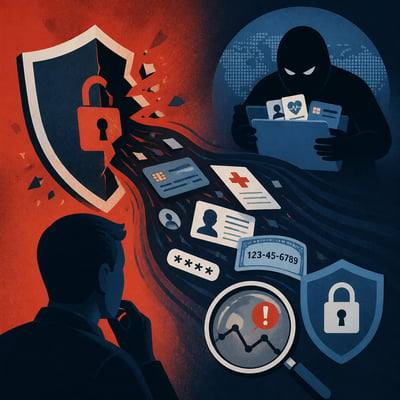
Data Breach Fallout and Identity Fraud topic image

Personal-data breaches can expose credentials, payment information, Social Security numbers, medical records, and sensitive mental-health details, creating risks that extend beyond the originally breached service.

The dominant guidance is to identify what was exposed, change reused passwords, enable multifactor authentication, review account and credit activity, and use fraud alerts or credit freezes when appropriate. Because stolen data may be reused or combined months or years later, breach response requires sustained monitoring rather than a single password reset or short-term credit-monitoring offer.

Key Articles4 of 19 articles

If you read one thing

It provides the clearest broad introduction to breach risks, delayed harm, and the need for prompt account and credit protections.

Service One Credit Union

Best explainer

It explains how credential stuffing connects breaches across services and how MFA, passkeys, and freezes reduce exposure.

Arizona Republic

The evidence

Its detailed guidance shows why protections must match the exposed data and why credit measures do not cover every fraud or impersonation pathway.

The Debt Survival Guide

The evidence

Its reported breach and identity-fraud figures substantiate the long-lived and delayed nature of breach fallout.

Aol
Key Issues

Breach data creates long-lived identity-fraud exposure

Exposed Social Security numbers and other identity data can remain usable for months or years, while aggregated records from older breaches continue to support delayed and multi-stage fraud. The impact therefore extends well beyond the original breach notice.

Drawn from 4 articles

Credential reuse keeps breaches connected across services

Stolen username-password pairs can be tested automatically against other services, making password reuse a major pathway from one breach to broader account takeover. MFA, passkeys, unique passwords, and password managers are the principal controls identified across the corpus.

Drawn from 4 articles

No single post-breach protection covers every fraud pathway

Credit freezes and fraud alerts can limit new-account fraud, but they do not stop unauthorized withdrawals, tax, benefits, utility, employment, checking-account, or other misuse. Effective response depends on the specific data exposed and combines account security, credit actions, transaction review, and ongoing monitoring.

Drawn from 5 articles

Breach fallout expands through phishing and impersonation

Breach victims face follow-on attempts by callers, messages, or fake agencies seeking additional sensitive information. The response burden is especially high when health, mental-health, or identity data is involved, requiring independent verification and sustained caution rather than reliance on breach-related outreach.

Drawn from 4 articles

Looking Back
430 Day Timeline
2025Jan 1Mar 5May 28Jul 30Oct 22Dec 242026Jan 1Mar 5May 28Jul 30Oct 22Dec 24
The Story So Far
No material change

New articles reinforce existing guidance that breach response should match the data exposed and that credit freezes or monitoring do not cover every form of fraud; they do not establish a material change in the underlying topic.

Previously

Personal-data breaches can expose credentials, payment information, Social Security numbers, medical records, and sensitive mental-health details, creating risks that extend beyond the originally breached service. The dominant guidance is to identify what was exposed, change reused passwords, enable multifactor authentication, review account and credit activity, and use fraud alerts or credit freezes when appropriate. Because stolen data may be reused or combined months or years later, breach response requires sustained monitoring rather than a single password reset or short-term credit-monitoring offer.

All Articles19 articles
Important12 articles · CI Score 60 and above
Arizona Republic
HaveIBeenPwned and FTC recovery guidance describe defenses against identity theft after data-breach exposure enabled password stuffing.
6/14/2026 • Cybersecurity Tech (Privacy-Relevant) • General
Dark Reading
Security incident trackers and survey results show rising US data-breach volume and widespread PII exposure alongside low adult follow-through on breach impact checks.
5/18/2026 • Data Breaches & Exposure Events • General
The Debt Survival Guide
Consumers should classify data exposed in a breach and use targeted protections, including credential changes, credit freezes, and identity-theft recovery tools, across the United States.
8/28/2026 • Data Breaches & Exposure Events • General
FreezeReports.com
Consumers are advised to secure accounts, monitor financial and medical activity, and consider credit freezes after organizations disclose personal data breaches.
8/2/2026 • Data Breaches & Exposure Events • General
Steadyline / Ravi Mishra
U.S. consumer guidance explains what to document and do after a mental health app data breach, emphasizing notice preservation and account security actions.
7/26/2026 • Data Breaches & Exposure Events • General
Experian / Tim Maxwell
Consumers can use breach-checking tools and credit bureau reports to detect exposure and take steps like multifactor authentication, fraud alerts, and credit freezes.
7/19/2026 • Data Breaches & Exposure Events • General
Experian / Ben Luthi
When personal information is exposed in a data breach, criminals can commit identity theft, so individuals should monitor credit and use fraud alerts or credit freezes.
7/18/2026 • Data Breaches & Exposure Events • General
ILLUMINATION / Sharath Reddy
Security incident notifications arrive after data exfiltration, enabling credential stuffing that reuses stolen credentials across other websites.
6/29/2026 • Cybersecurity (Privacy-Relevant) • General
Aol
In the United States, rising identity fraud losses and FTC reports show delayed fraud impacts after data compromises.
5/10/2026 • Cybersecurity (Privacy-Relevant) • General
Vermont Daily Chronicle / Timothy Page
Privacy guidance advises data breach victims in the United States to use IRS PINs, authentication, credit freezes, password changes, and scam precautions immediately.
8/25/2026 • Data Breaches & Exposure Events • General
Cleveland.com / Leada Gore
Consumers with suspected personal-data exposure are urged to freeze credit, monitor accounts and report identity theft through credit bureaus and the Federal Trade Commission.
8/10/2026 • Personal Data & Identity • General
JD Supra
UpGuard researchers uncover a misconfigured cloud database exposing billions of records in Germany, prompting FBI IC3 and Hetzner to take it down.
2/27/2026 • Data Breaches & Exposure Events • General
Interesting7 articles · CI Score 45–59
Class Action U
After a credit card data breach, consumers are advised to cancel cards, freeze credit at Equifax, Experian, and TransUnion, and report fraud to the FTC.
7/2/2026 • Data Breaches & Exposure Events • General
KSAT San Antonio
After a data breach involving Alamo Heights Independent School District in Texas, experts advised parents to freeze children's credit reports, change passwords, and monitor accounts for identity theft risk.
6/28/2026 • Personal Data & Identity • General
The Derrick
Consumer guidance recommends password resets, two-factor authentication, and credit freezes at Experian, TransUnion, and Equifax after multiple breach notices.
6/14/2026 • Cybersecurity Tech (Privacy-Relevant) • General
Experian / Karen Axelton
Experian advises families in the USA to check minor credit files and place bureau-specific security freezes after child data breaches.
5/13/2026 • Data Breaches & Exposure Events • General
Wirecutter: Reviews for the Real World / Max Eddy
New York Times Wirecutter outlines in a 2020s U.S.-focused guide how individuals should respond when personal data is exposed in consumer data breaches.
6/25/2025 • Data Breaches & Exposure Events • General
Total Defense
Google notes that exposed credentials from third-party breaches can enable rapid account takeover, so breach notifications require immediate password changes and 2FA.
7/2/2026 • Cybersecurity Tech (Privacy-Relevant) • General
Service One Credit Union
In the United States, guidance on data breach response emphasizes MFA, password de-duplication, and credit report monitoring to reduce identity theft risk.
6/10/2026 • Data Breaches & Exposure Events • General