
 AI Governance
 Data Centers
 Drones
 Climate
 Privacy
 2026 Maine Senate
 Bob Dylan
Canada’s Privacy Reform Faces Senate Tests
Coverage from CIGI, Al Jazeera, and others
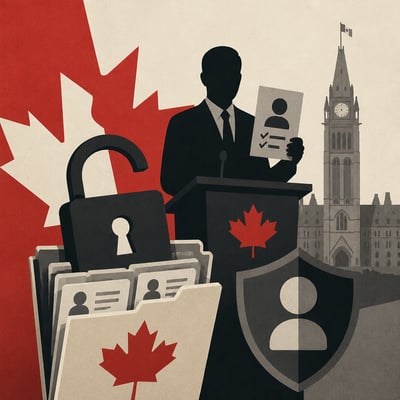
Canada is pursuing a major update to private-sector privacy rules while Parliament debates separate provisions governing political parties’ use of voter data.
Bill C-36 would expand rights over inferred personal information, automated decisions, children’s data and deletion, while Bill C-4 would create a limited federal regime for political parties and has drawn Senate scrutiny. The broader reform debate also includes data sovereignty, cross-border transfers, enforcement powers and how privacy law should address AI-related harms.
The main change is a sharper framing of the reform package: Bill C-36 is now tied to a fundamental-rights model and explicit AI/inference protections, while Bill C-4’s political-party regime has advanced with a Senate-approved sunset clause. The story also adds a clearer next-phase policy debate around data sovereignty and cross-border transfer risk assessments.
The story has sharpened from a broad privacy-law rewrite into two concrete legislative tracks, with Bill C-36 now the main private-sector reform vehicle and Bill C-4 the focal point for political-party privacy rules. The emphasis has also shifted toward institutional design and enforcement, especially whether authority stays with the Privacy Commissioner or moves to new access/enforcement bodies.