
 AI Governance
 Data Centers
 Drones
 Climate
 Privacy
 2026 Maine Senate
 Bob Dylan
Border Searches Reach Travelers’ Phones
Coverage from Data Privacy + Cybersecurity Insider, U.S. Constitution, and others
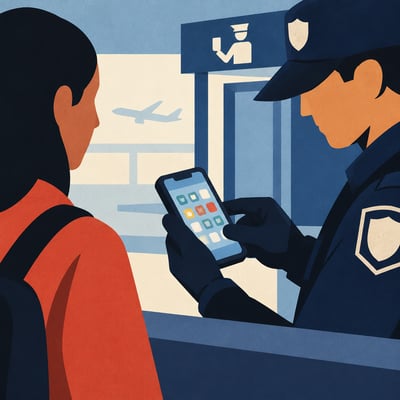
The Second Circuit ruled in United States v.
Alisigwe that federal agents may manually search a traveler’s cellphone at an international border without a warrant or individualized suspicion. The decision applies to federal cases in New York, Connecticut, and Vermont, and treats phones as property subject to the border-search exception despite their extensive personal data. The ruling leaves the boundaries of forensic extraction and broader data copying unresolved, while a dissent raised privacy and discrimination concerns.
If you read one thing
It clearly explains the ruling, the limits left unresolved, and the dissent’s privacy concerns without duplicating another candidate’s account.
Suspicionless manual phone searches are permitted in the Second Circuit
The Second Circuit permits federal agents to manually search travelers’ phones at international borders without a warrant or individualized suspicion, including searches for evidence of ordinary crimes. The ruling treats phones as property under the border-search exception despite the sensitive information they contain.
No material change is evident since the prior state; no new articles joined the Topic.
Previously
The Second Circuit ruled in United States v. Alisigwe that federal agents may manually search a traveler’s cellphone at an international border without a warrant or individualized suspicion. The decision applies to federal cases in New York, Connecticut, and Vermont, and treats phones as property subject to the border-search exception despite their extensive personal data. The ruling leaves the boundaries of forensic extraction and broader data copying unresolved, while a dissent raised privacy and discrimination concerns.