
 AI Governance
 Data Centers
 Drones
 Climate
 Privacy
 2026 Maine Senate
 Bob Dylan
Apple’s Glasses Bet Meets Consent
Coverage from TechTarget, Eweek, and others
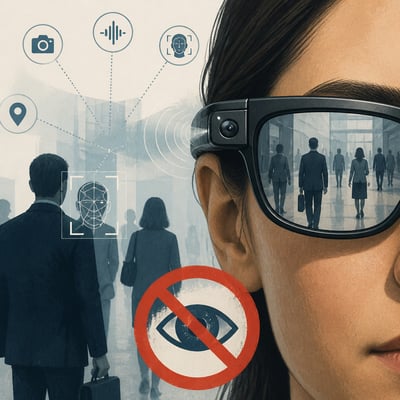
Apple is reportedly delaying its first smart glasses while refining how cameras, AI processing, recording controls, and captured data will be handled.
Proposed safeguards include on-device processing, visible recording indicators, limits on storing or using footage for AI training, and avoiding facial recognition. The approach reflects wider concerns about unnoticed recording, biometric collection, human review of footage, and restrictions on camera-equipped eyewear in sensitive public settings.
The story adds more concrete detail about Apple’s privacy architecture, including potentially keeping routine camera data off Apple’s servers and avoiding storage. It also indicates that venue restrictions have moved from emerging concerns to implemented 2026 rules, while the broader narrative remains largely confirmatory.
The main change is a sharper privacy-specific redesign story for Apple’s smart glasses: the project is now framed as being delayed while Apple tests additional safeguards, including more restrictive camera and data-use controls. The current version also adds a clearer operational constraint, with courts and sensitive venues increasingly restricting eyewear use.
The story has sharpened from broad concern about smart-glasses privacy into a more concrete market-and-product race, with Apple’s delayed N50 positioning privacy controls as a differentiator while Meta’s commercial success is paired with more specific allegations of covert capture and data reuse. The scope also widens beyond glasses to other wearables, reinforcing that the privacy problem is now a broader category issue rather than a single-device debate.
- Apple N50 is reportedly targeting WWDC 2027 and late-2027 availability.
- Apple's planned safeguards now include excluding customer recordings from model training.
- Meta reporting cites covert capture, indicator bypasses, and contractor access.
- Conversation-recording pendants add a new wearable category with similar privacy risks.
- Proposed state measures and venue policies are now part of the legal landscape.
Camera-equipped AI glasses are moving from niche devices toward mainstream consumer and workplace use, while their ordinary appearance makes recording harder for bystanders to detect. The central concern is that photos, audio, facial signals, and behavioral data may be captured and analyzed without meaningful consent, creating legal exposure and undermining trust in public and professional settings. Existing protections remain fragmented across recording-consent, biometric-privacy, employment, and sector-specific laws, increasing pressure for clearer notice and stronger device-level safeguards.