
 AI Governance
 Data Centers
 Drones
 Climate
 Privacy
 2026 Maine Senate
 Bob Dylan
AI Surveillance And Targeting
Coverage from LA Times, CounterPunch, and others
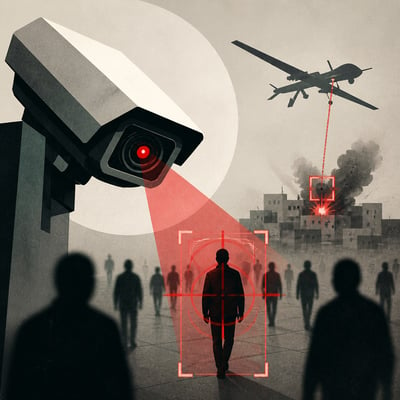
This topic centers on AI-enabled surveillance and targeting systems used to identify, track, and strike people across military conflict zones.
The material focuses on how large-scale data collection from phones, cameras, drones, social media, and government databases is fused into threat profiles and target lists. It matters because these systems can accelerate lethal decision-making while raising concerns about misidentification, civilian harm, and the use of commercial AI tools in warfare.
The story is now framed more narrowly around military targeting in Lebanon and Gaza, with more concrete attribution to named systems, targets, and data infrastructure. It adds specific claims about Palantir Maven, Ahmad Turmus, hacked networks, and public protests over suppliers.
The story has broadened from general AI-enabled surveillance and targeting to a more specific account of how multiple data sources are fused in military intelligence workflows, with facial recognition and intercepted communications now explicitly part of suspect identification. The reporting also adds a parallel public-safety surveillance track in the Eastern Mediterranean, reinforcing concerns about secondary use and limited oversight.