
 AI Governance
 Data Centers
 Drones
 Climate
 Privacy
 2026 Maine Senate
 Bob Dylan
Rough And Rowdy Ways Tour Evolution
Coverage from Flagging Down the Double E's, Billboard, and others
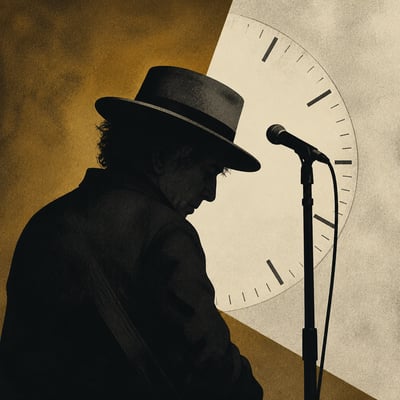
Bob Dylan's Rough and Rowdy Ways tour remains active and evolving, with piano-led arrangements, rotating deep cuts, and occasional rare-song revivals defining the current live phase.
Recent reporting shows the run extending into 2026, with setlists still centered on Rough and Rowdy Ways material but increasingly mixing in older catalog songs treated in new ways. The topic is coherent and fairly dense, driven more by live-performance change than by album reappraisal alone.
The main change is a broader and more specific framing of the tour: it now explicitly spans European as well as North American dates, with a stronger emphasis on piano-led restraint and occasional guitar-driven improvisation. The current version also adds concrete backing-band continuity and points to preserving performances through bootleg compilations.
The story is largely stable, but the framing now emphasizes the tour’s current Midwest run and the concert environment more than the broader Europe/Midwest arc. The updated version also adds Yondr-backed phone restrictions as a named implementation detail and broadens the list of instrumental styles being used in performance.
The story is slightly reframed from a Midwest-heavy tour update to a broader account of Dylan sustaining the Rough and Rowdy Ways format across the Midwest and Europe, with more emphasis on how improvisation shapes each performance. The new version also adds bootleg recordings as evidence that the live rearrangements remain central to the tour’s appeal.
The story adds concrete evidence that Dylan’s current tour is drawing strong demand in smaller Midwest venues, while also sharpening the criticism around acoustics, crowd behavior, and performance variability. It also adds a notable performance wrinkle: an unusually expanded run of electric guitar playing in Davenport.
No material change is present between the previous and current versions. The touring pattern, performance style, venue mix, and interpretive framing all remain the same.
The update mainly refines the tour’s framing rather than changing its substance: the setlist is described more broadly as including selected covers, and the venue pattern is now centered on theaters and amphitheaters in the Midwest. The strongest new emphasis is on the variability of arrangements and mixed critical reactions, not on any new tour direction.
The story shifts from a general account of Dylan's controlled tour format to a more specific emphasis on regional Midwest routing and the tour's phone-free, album-centered presentation. It also adds clearer detail on the ensemble and the mix of arrangements now driving the live shows.
The story is largely unchanged, but the framing now emphasizes that Dylan’s controlled tour format is sustained across both U.S. and international dates, with phone restrictions and venue conditions continuing to shape how shows land. The current version also softens the focus on specific performance quirks and instead highlights the tour’s ongoing consistency and preserved alternate versions in recordings.
The story is now more specific about how the tour is being documented and experienced: it adds a retrospective bootleg compilation and identifies one notably expanded electric-guitar performance in Davenport. The framing also shifts slightly from a general touring pattern to a more explicit emphasis on venue-specific variation and the tour’s controlled, nontraditional presentation.
The story broadens from a largely Midwest concert run to a more explicitly international touring cycle, with the current version emphasizing European dates and the tour’s fifth year in 2026. It also reframes the live experience more strongly around controlled concert conditions, including strict start times and premium pricing.
The update adds a more specific live-performance development: Dylan’s Davenport show featured an unusual four-song stretch on electric guitar, underscoring greater instrumental unpredictability within an otherwise stable tour format. It also slightly broadens and refines the venue and setlist framing, but the core story remains the same.
The story adds more specific evidence that Dylan’s tour is still active and varied in 2025-26, with tighter emphasis on Midwest theater dates, occasional guitar use, and audience factors like ticket prices shaping demand. It also introduces a tentative “final tour” interpretation, though that framing remains unconfirmed.
The story shifts from a general account of Dylan’s variable live performances to a more specific picture of a stable core setlist and tightly controlled concert format. The new emphasis is on how that format is being maintained across small and mid-sized U.S. and European venues, with variation coming mainly from rearrangements and occasional instrumentation changes.
The story broadens from a mostly acoustic, setlist-focused tour reset into a wider account of how Dylan’s performances vary across venues and geographies, including European dates and phone-free concert practices. It also adds a new specific performance wrinkle: Dylan’s unusually expanded electric-guitar role at Davenport.
The story has shifted from tour-extension reporting to a clearer account of Dylan actively reshaping the 2026 live show itself. The new emphasis is on acoustic staging, reduced Rough and Rowdy Ways reliance, and notable setlist breakthroughs like the return of "The Man in the Long Black Coat" and the debut of "Nervous Breakdown."
- Live staging has become more acoustic-forward with a smaller keyboard setup.
- Early 2026 shows include fewer Rough and Rowdy Ways songs.
- Omaha marked the return of "The Man in the Long Black Coat."
- "Nervous Breakdown" debuted as Dylan's first-ever live cover.
- Later spring shows repeated the rearranged, selective-rotation format.
The biggest change is that Dylan's touring cycle is no longer just continuing into 2026; it is being actively extended with additional U.S. dates and routing updates, especially across mid-sized venues. The framing also shifts slightly from a stable live-era narrative to one marked by branding inconsistency and a clearer summer 2026 rollout.
The main update is that the Rough and Rowdy Ways live cycle is now clearly extending into 2026, with fresh reporting emphasizing that the tour is still active rather than nearing closure. The framing also tilts more strongly toward a living reinvention project, highlighted by rare revivals like "You Ain't Goin' Nowhere" and the continued reshaping of older material.
Bob Dylan's Rough and Rowdy Ways era is still being tracked as an active live project built around piano-led reinventions, stable core setlists, and recurring changes to older songs. Recent pieces emphasize the tour's continuation, possible winding-down, and ongoing debate over whether the run has ended or simply changed shape.