
 AI Governance
 Data Centers
 Drones
 Climate
 Privacy
 2026 Maine Senate
 Bob Dylan

Bob Dylan’s Collaborations and Performances
Coverage from Bob Dylan, Guitar World, and others
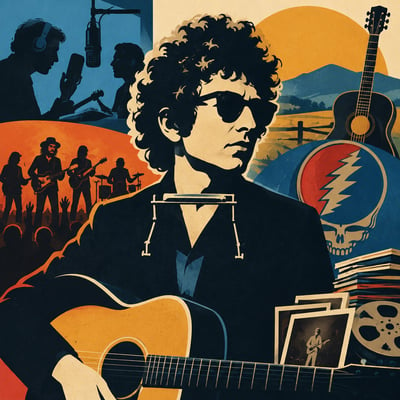
Bob Dylan’s music has taken shape through studio collaborations, recordings, and performances with other musicians and bands.
The subject includes collaborative contexts such as The Basement Tapes and the Traveling Wilburys, alongside live arrangements, archival performances, and interpretations of Dylan’s influence. Together, these connections show how his songs and recordings have been created and carried across different musical settings.
If you read one thing
Its broad account of Dylan’s collaborative, improvisational recording culture offers a useful starting point for the Topic.
The evidence
Tony Garnier’s firsthand account shows how Dylan’s songs and the band’s interplay shape adaptive live arrangements.
The evidence
Its reported details about the Blue Rock sessions provide a focused example of collaboration and archival uncertainty in Dylan’s recordings.
Best explainer
It adds the distinct retrospective perspective of Dylan’s influence on Jerry Garcia and the wider musical response to his work.
Adaptive live arrangements
Dylan’s live performances are characterized by flexible arrangements, improvisation, and musicians who respond to the songs rather than simply reproduce fixed parts. Accounts of Tony Garnier’s bass work and ensemble interplay show collaborators actively shaping how familiar material sounds onstage.
Collaborative recordings and contested archival details
Dylan’s recordings are portrayed as collaborative, performance-led processes, from relaxed ensemble sessions to work shaped by musicians such as Leon Russell and Blake Mills. The account of the 1971 Blue Rock sessions adds an important qualification: details of the material recorded and the handling of the tapes remain contested.
No material change is supported: the supplied articles were not newly added since the prior state and provide no new evidence of a change in Dylan’s musical collaborations.
Previously
Recent Dylan interviews, performance analyses, and archival releases trace how collaborators shape fluid live arrangements, spontaneous studio recordings, and the continuing reinterpretation of his catalog.
The main new element is that details of the 1971 Blue Rock sessions, including tape handling, are contested. Otherwise, the current version largely reinforces the existing picture of flexible collaboration.
The story now places greater emphasis on Never Ending Tour-era archival material and the specific contributions of touring musicians, especially Larry Campbell and Charlie Sexton. This sharpens the broader improvisation theme into a more focused account of how individual performers reshaped Dylan’s established songs.