
 AI Governance
 Data Centers
 Drones
 Climate
 Privacy
 2026 Maine Senate
 Bob Dylan
Bob Dylan’s Collaborations and Performances
Coverage from Bob Dylan, Guitar World, and others
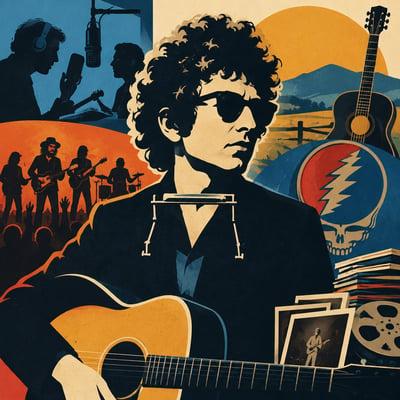
Bob Dylan’s music has taken shape through studio collaborations, recordings, and performances with other musicians and bands.
The subject includes collaborative contexts such as The Basement Tapes and the Traveling Wilburys, alongside live arrangements, archival performances, and interpretations of Dylan’s influence. Together, these connections show how his songs and recordings have been created and carried across different musical settings.
If you read one thing
Tony Garnier’s firsthand account offers the clearest broad introduction to Dylan’s adaptive, collaborative live arrangements.
Best explainer
Its account of the 1971 Columbia session explains how minimal rehearsal, home-jam continuity, and quick takes shaped Dylan’s studio process.
The evidence
Blake Mills’s perspective provides a distinct example of understated contemporary collaboration on Rough and Rowdy Ways.
The evidence
The Blue Rock session account connects Dylan’s collaborative recording practice with his engagement with older artists and musical traditions.
Adaptive live arrangements
Dylan’s live work is defined by flexible song structures, subtle cues, improvisation, and musicians who actively reshape familiar material. Recent archival attention sharpens this picture by foregrounding Tony Garnier, Larry Campbell, Charlie Sexton, and other ensemble members as arrangement-makers rather than interchangeable accompanists.
Archival reassessment of the Never Ending Tour era
Recent archival projects are shifting attention toward the Never Ending Tour period and documenting how touring musicians reshaped established songs in performance. This adds specific personnel, arrangement roles, and recorded evidence to an otherwise long-standing general account of Dylan’s improvisational practice.
No material change is supported since the prior state; the supplied articles were not newly added after the previous snapshot and add no new evidence.
Previously
Recent Dylan analysis connects archival sessions, longtime band collaborators, and contemporary song studies through a recurring picture of improvisation, flexible arrangements, and performance-led recording. Historical material dominates, but the pattern remains relevant to later live versions and current reassessments of his catalog.
The main new element is that details of the 1971 Blue Rock sessions, including tape handling, are contested. Otherwise, the current version largely reinforces the existing picture of flexible collaboration.
The story now places greater emphasis on Never Ending Tour-era archival material and the specific contributions of touring musicians, especially Larry Campbell and Charlie Sexton. This sharpens the broader improvisation theme into a more focused account of how individual performers reshaped Dylan’s established songs.