
 AI Governance
 Data Centers
 Drones
 Climate
 Privacy
 2026 Maine Senate
 Bob Dylan
Bob Dylan’s Desire
Coverage from Hot Press, Glide Magazine, and others
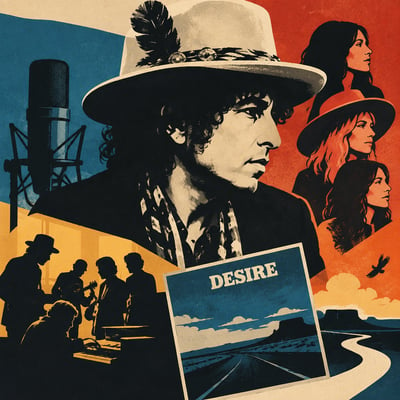
Bob Dylan’s Desire is a landmark 1976 album shaped by his songwriting partnership with Jacques Levy and an unusually vivid ensemble of musicians, including violinist Scarlet Rivera, bassist Rob Stoner, and drummer Howard Wyeth.
Its songs range from the protest narrative of “Hurricane” to “Isis,” “Joey,” “Sara,” and “One More Cup of Coffee,” combining personal upheaval, historical storytelling, and expansive musical arrangements. The album’s story also extends into the Rolling Thunder Revue, archival and bootleg recordings, critical reassessment, and later performances that reimagine its songs while preserving the importance of the original collaboration.
If you read one thing
It provides the broadest introduction to Desire’s collaborative sound, songwriting, instrumentation, and performance legacy.
Best explainer
It explains how spontaneous sessions, improvisational choices, and collaboration transformed disorderly recording circumstances into a cohesive album.
The evidence
It offers a focused critical account of Desire’s cinematic storytelling and the tension between mythic masks and biography.
The evidence
It connects the studio album to Rolling Thunder performances and shows how live arrangements shaped Desire’s continuing artistic meaning.
Collaboration defines the album’s sonic identity
Current reassessments consistently treat Desire as a collaborative reinvention rather than a conventional solo Dylan record. Jacques Levy’s co-writing, Scarlet Rivera’s violin, guest vocals, and unconventional ensemble choices are presented as central to its cinematic, Americana-inflected sound.
Spontaneous sessions became a coherent landmark
The album is widely understood as the product of rapid, disorderly sessions in which chance player contributions and a shifting core ensemble were converted into a distinctive finished record. This process remains part of the album’s explanatory mythology, including the later re-recording of “Hurricane” amid factual or legal concerns.
Mythic storytelling outweighs straightforward autobiography
Interpretation currently centers on Desire’s extended, cinematic narratives and theatrical personae, with critics balancing mythic or quest-based readings against attempts to connect the songs to Dylan’s relationships and personal upheaval. The same tension also raises questions about historical accuracy and the ethics of portraying real-life figures.
The album’s performance life remains tied to Rolling Thunder
Desire is increasingly assessed alongside Rolling Thunder Revue performances, where its songs are often described as more dynamic and cohesive than on the studio album. Its 50th-anniversary afterlife is active through album-sequence tributes and appearances by figures such as Scarlet Rivera and Rob Stoner, but the corpus documents revival activity rather than a new Dylan release or tour.
No new member articles were supplied, so there is no evidence of a material change in the real-world development of the topic.
Previously
A 50th-anniversary wave revisits Bob Dylan's Desire as a collaborative, violin-led 1976 album shaped by Jacques Levy, Scarlet Rivera, Emmylou Harris, improvised studio work, and the Rolling Thunder Revue, while renewed song analysis debates its narrative methods, historical accuracy, and uneven critical reputation.