
 AI Governance
 Data Centers
 Drones
 Climate
 Privacy
 2026 Maine Senate
 Bob Dylan
Bob Dylan Cultural Criticism
Coverage from Greilmarcus, Greil Marcus, and others
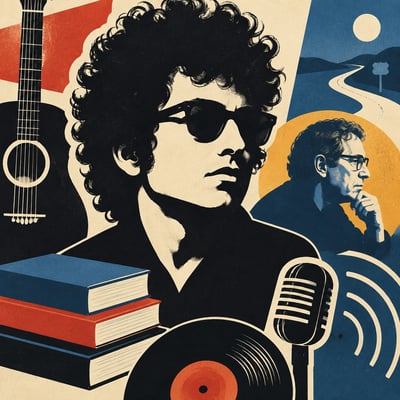
Bob Dylan’s music has generated an unusually rich body of criticism about songwriting, American musical traditions, performance, and cultural memory.
This subject brings together Greil Marcus’s writing and reader columns, interpretations of songs and albums, and discussion of works such as The Basement Tapes and Invisible Republic. It also includes Dylan’s Theme Time Radio Hour, where introductions, stories, readings, and selections from blues, country, jazz, folk, reggae, and other traditions illuminate the connections behind the music. Together, these perspectives examine both Dylan’s artistic work and the broader cultural worlds that critics and Dylan himself place around it.
If you read one thing
It offers the broadest introduction to Marcus’s interpretive method and Dylan’s place in American musical traditions.
The evidence
It shows how Dylan’s songs sustain competing moral, religious, biographical, and national readings.
Best explainer
It clearly demonstrates Theme Time Radio Hour as a researched and imaginative act of cultural curation.
The evidence
It explains how changing live arrangements and interpretations keep Dylan’s older material culturally active.
Dylan’s work remains structurally open to competing readings
The evidence treats Dylan’s songs and records as unstable cultural narratives rather than texts with settled meanings. Moral, religious, political, biographical, and national interpretations coexist, with empathy, identity, protest, and authenticity repeatedly contested.
Theme Time functions as a major curatorial project
Theme Time Radio Hour is treated as more than ancillary Dylan material: it is a sustained act of cultural curation that combines eclectic recordings, historical research, readings, humor, and thematic associations. Its episodes connect popular music to American mobility, commerce, religion, family, sport, and other social histories.
Meaning is carried by revision in performance and form
Dylan’s continuing relevance is tied to reinterpretation: live arrangements, changing setlists, altered vocal or lyrical choices, album sequencing, and late-career works can recast older material and reshape its historical or moral force. The corpus therefore emphasizes artistic agency and formal decisions over fixed canonical readings.
No new topic members were supplied, so there is no evidence of a material change in the subject since the prior state.
Previously
Greil Marcus's criticism and Q&As currently revisit Bob Dylan's folk lineage, album structure, live reinterpretation, cultural memory, and Theme Time Radio Hour, while reviewers debate the limits of his expansive method.