
 AI Governance
 Data Centers
 Drones
 Climate
 Privacy
 2026 Maine Senate
 Bob Dylan

Thermal Drones Expand Search And Rescue
Coverage from DroneDJ, DroneXL, and others
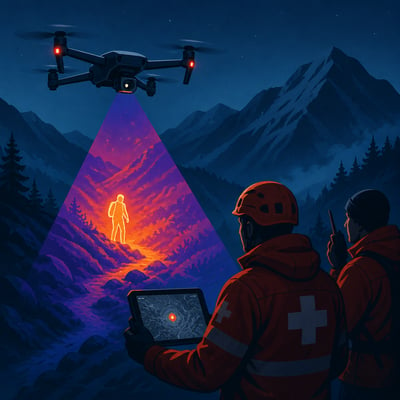
Thermal-imaging drones are being used by police, firefighters, emergency services, animal rescue groups, and wildlife organizations to locate people, pets, animals, suspects, and hidden fire hazards.
Their value is strongest at night, in smoke, tall vegetation, rugged terrain, or other conditions that limit ground visibility. The reporting shows broader local adoption, including AI detection, loudspeakers, and permanent launch docks, while also highlighting costs, staffing limits, privacy concerns, and the risk of public opposition or equipment loss.
The story broadens from recurring public-safety drone use to a wider, more local and community-driven adoption model that explicitly includes wildlife organizations and Indigenous/community programs. The new version also emphasizes practical operating limits and public acceptance issues more clearly than before.
The story broadens from isolated thermal-drone search successes into a more established operational model for local public-safety agencies, with recurring deployments, docked systems, GPS-linked coordination, and AI support now shown as part of routine workflows. It also expands beyond government use, while constraints around staffing, endurance, privacy, public interference, and equipment sourcing become more prominent.