
 AI Governance
 Data Centers
 Drones
 Climate
 Privacy
 2026 Maine Senate
 Bob Dylan

Quadrotors Master Narrow-Gap Flight
Coverage from Techxplore, Embodied Global, and others
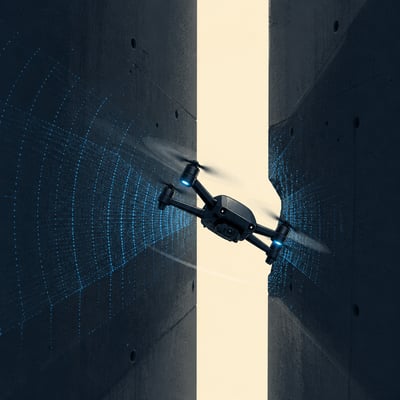
Zhejiang University researchers developed a sensorimotor control policy that converts onboard camera and flight-state data directly into motor commands, allowing quadrotors to traverse narrow, tilted, and moving gaps without GPS, motion capture, or prior knowledge of gap position.
Trained with reinforcement learning in simulation and supported by model-based trajectory initialization, the system was demonstrated in real-world tests, including a reported 5-centimeter-clearance passage and maneuvers at tilt angles up to 90 degrees. The work could improve drone operations in confined environments such as collapsed structures, industrial sites, tunnels, and pipelines, while its broader operational reliability remains to be established.
The update mainly adds publication and validation detail: the work is now explicitly tied to Science Robotics and presented as tested in real-world conditions. It also reframes the system as direct sensor-to-motor control without prior gap-location knowledge.
The story is largely stable, but the framing has shifted slightly toward a more application-oriented account of the drone system's practical value in confined and damaged environments. The current version also more explicitly states the sensing stack and confirms the work's validation without changing the core technical claim.