
 AI Governance
 Data Centers
 Drones
 Climate
 Privacy
 2026 Maine Senate
 Bob Dylan

FCC Drone Restrictions Reach Approved Systems
Coverage from Toy Association, The Drone Girl, and others
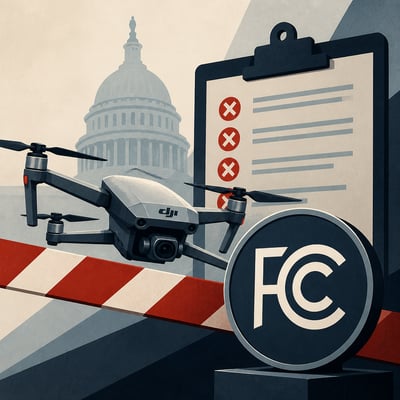
U.S. regulators are moving from blocking new foreign-made drone authorizations toward restricting previously approved products and rebranded equipment, while operators contest broad capability definitions and prepare for supply-chain disruption.
The story now includes strong empirical opposition to the FCC proposal and clearer evidence that it is reshaping procurement and domestic drone manufacturing. A narrow toy-drone exemption also indicates regulators are applying capability-based distinctions rather than imposing an origin-only ban.
The update mainly confirms the existing regulatory-risk picture while sharpening its market-access and fleet-continuity implications. It also identifies DRONERESPONDERS and the Commercial Drone Alliance as named commenters seeking more time.
The FCC comment process is now more specifically defined: comments opened under Public Notice DA 26-758, and the September 2, 2026 deadline remains after extension requests were rejected. DRONERESPONDERS also emerges as a newly identified stakeholder.
The FCC proposal is now framed as a concrete, prospective market-access restriction: existing aircraft may continue flying, but future imports, sales, replacement parts, and support could be constrained after a transition period. DJI is also actively challenging the scope of the definitions and urging affected operators to respond.
The FCC story has shifted from broad tightening of drone access to a more explicit, active regulatory process that also preserves clearer exemption pathways. The newest wrinkle is a specific FAA approval for Blueflite and reported FCC-related delays affecting DJI beyond drones, increasing the sense of near-term market disruption.
The story now centers more explicitly on a broader FCC enforcement and authorization framework: not just restricting foreign-made drones, but also using Blue UAS, Buy American, and Conditional Approvals as structured pathways for vetted equipment. The current version also adds concrete conditional approvals and sharper scrutiny of domestic-manufacturing claims, while expanding the likely impact to civilian and industrial uses.
- Blue UAS and Buy American exemptions were extended through January 1, 2028.
- Conditional Approvals now depend on continuing onshoring and product-vetting compliance.
- Ayre CX and Firefly received Conditional Approvals.
- Enforcement now targets false domestic-manufacturing claims and circumvention schemes.
- Proposed limits could cover agricultural spraying and synchronized drone light shows.
The story now emphasizes that the FCC’s drone crackdown is broader and more specific, adding proposed blocks on swarm-capable and infrared-equipped foreign drones while extending protections for some non-Chinese components. It also more clearly frames the policy as preserving use of most already-purchased drones rather than forcing immediate grounding.
The story now includes a concrete exemption for very small toy drones and a longer runway for software updates on already approved Chinese drones, showing the FCC is not just restricting market entry but also carving out narrow continuance paths. It also adds a new enforcement angle, as the agency may target alleged DJI rebranders and retroactively sweep some previously authorized equipment into restrictions.
- Toy drones under 150 grams are exempt if they lack cameras, sensors, connectivity, and long flight time.
- Critical updates for approved Chinese drones are allowed through at least January 1, 2029.
- FCC may target companies rebranding or reshelling DJI drones and cameras.
- DJI and Autel are explicitly identified as heavily affected brands.
- Restrictions may disrupt wildfire response, flood mapping, and missing-person searches.
The story now emphasizes that the FCC's exemption machinery is becoming a live screening process, not just a carve-out in principle. It also adds that conditional approvals are accelerating, signaling a more selective and operationally active regime for foreign-produced drones.
The story has broadened from a foreign-drone restriction dispute into a more developed exemption regime, with case-by-case approval pathways now central to how U.S. access may continue. The latest version also adds a new security concern around cellular-controlled and remotely operated drone threats, extending the policy debate beyond foreign hardware alone.
The story has shifted from a broad fight over foreign-drone restrictions to a more concrete regulatory regime with narrow exemptions and visible market consequences. The addition of toy-drone carveouts and reports of launch delays and stock pressure make the policy effects more immediate and operational.
The story now emphasizes a broader, more active regulatory fight: the FCC is not just restricting foreign drones, but facing a coordinated challenge that includes lawsuits, cybersecurity evidence, and arguments over whether blanket bans fit real-world drone use. The framing also shifts from a DJI-centered dispute to a wider Covered List battle involving Autel and narrow carve-outs for low-risk products.
- DJI is now cited as using independent cybersecurity evidence.
- Autel is explicitly positioned as a secondary affected manufacturer.
- FCC carve-out covers low-risk Chinese toy drones with strict limits.
- Challenges now include a Ninth Circuit lawsuit and cybersecurity filings.
- The dispute is framed around mission-based security screening.
The story has shifted from a broad FCC foreign-drone restriction fight to a more operationally specific process that now includes conditional exemptions for selected products. That makes the dispute less about an outright ban and more about how the FCC will separate restricted systems from approved ones after national-security review.
The story has sharpened from a general FCC foreign-drone restriction dispute into a more concrete regulatory regime with longer update waivers, limited exemptions, and active court and filing challenges. The new version adds clearer evidence that the fight is now about how much of the DJI/Autel ecosystem can remain usable, not just whether it is restricted.
- Update waivers now extend through 2029 for already-authorized drones.
- DJI and Autel are pursuing petitions, filings, and litigation.
- Blue UAS and domestic-end-product criteria are being used as limited approval pathways.
- The dispute is now in the Ninth Circuit Court of Appeals.
- DJI-backed assessments say no major vulnerabilities were found.
The update adds a clearer sense that the FCC fight is still actively moving through multiple procedural channels, not just broad restriction and pushback. It also broadens the story from drone access alone to a wider regulatory debate over foreign-made connected equipment and supply-chain control.
The main update is that the FCC story has become more operationally specific: in addition to tightening new authorization, it now includes explicit waivers letting already-authorized covered drones keep receiving software and firmware updates through 2028-2029. The current framing also broadens the opposition from DJI and Autel alone to a wider industry coalition warning about disruption and update delays.
The story has broadened from a dispute over drone restrictions into a more structured FCC regime with narrow exemptions, procurement pathways, and update waivers. It also now appears more clearly framed as a broader certification and market-access problem for DJI, not just a drone-specific fight.
- Limited exemption and temporary approval pathways are now part of the FCC regime.
- Blue UAS-linked procurement is newly incorporated into the policy structure.
- DJI-related certification issues now extend beyond drones into other consumer devices.
- Operators are explicitly arguing for mission-based flexibility over blanket origin bans.
The story has shifted from a narrow dispute over drone market-access limits to a broader FCC security regime that now also covers related components and, separately, non-drone consumer electronics impacts claimed by DJI. The FCC is also fine-tuning implementation by allowing limited updates for already authorized devices, underscoring a more unstable policy balance than before.
- Covered List restrictions now extend to related critical components.
- A separate FCC waiver allows limited updates for already-authorized covered drones.
- DJI says certification refusals are affecting non-drone consumer electronics sales.
- The current framing includes broader parallel litigation and reconsideration activity.
The story is now framed more clearly as an active FCC rulemaking conflict, with the agency not just reviewing restrictions but explicitly defending them while preserving limited update access for already approved drones. The new emphasis is on a sharper policy split: broad market-access limits versus narrow operational waivers.
The story has shifted from a general FCC review of foreign-drone restrictions to a more active enforcement phase, with commissioners publicly defending the policy and temporary update waivers now extended through 2027-2029. The dispute also broadens slightly as DJI says FCC certification issues are affecting non-drone consumer products, while operators intensify arguments about real-world disruption.
The main change is a reframing from a pending FCC dispute over drone restrictions to an actively enforced regime that now also reaches broader DJI product certification in the U.S. The added emphasis is on limited update waivers and on the FCC/U.S. government's position that the matter is still under review rather than fully settled.
The story is mostly stable, but it now explicitly adds DJI's broader U.S. certification problem beyond drones, widening the dispute's scope. The rest of the update mainly confirms the ongoing FCC challenge and temporary waiver framework.
The FCC’s treatment of foreign-made drones, especially DJI, is undergoing active review through public comments, court challenges, and waiver decisions. At the same time, the agency is keeping the broader Covered List restrictions in place while allowing limited software and firmware updates for already authorized devices. The most repeated pattern is a tension between security-driven market restrictions and continued reliance on foreign drone hardware in consumer, commercial, and public-safety use. DJI remains the central entity, but FCC officials, the Department of Defense, and advocacy groups are also shaping the outcome.