
 AI Governance
 Data Centers
 Drones
 Climate
 Privacy
 2026 Maine Senate
 Bob Dylan

Cheap Drones Reshape Air Defense
Coverage from RadioFreeEurope, NOEMA, and others
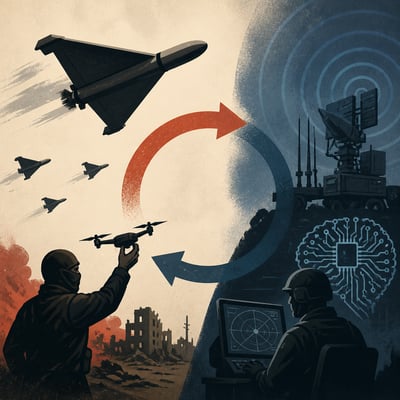
Inexpensive attack, surveillance, and interceptor drones are reshaping combat in Ukraine and the Middle East by enabling mass strikes, persistent battlefield observation, and lower-cost alternatives to conventional aircraft and missiles.
Shahed-type drones and related systems are placing pressure on air-defense ammunition, command posts, energy infrastructure, and maritime routes while Russia, Iran, Ukraine, NATO, and other actors expand production, improve navigation and autonomy, and test layered counter-drone defenses. The central challenge is matching affordable threats with defenses that can operate at scale without exhausting high-value missile inventories.
The story has expanded from a general account of low-cost drone warfare and defensive adaptation into a more specific emphasis on mass Shahed-type attacks, interceptor-drone development, and the operational strain on air-defense inventories. It also adds clearer detail on Russia-Iran cooperation improving drone performance and on the broader set of actors and theaters now affected.
The story shifts from a narrower focus on Shahed-style strike drones and interceptor buildup to a broader operational picture that includes FPV and surveillance drones, persistent battlefield observation, and changes in force posture. It also adds a more explicit, contested dimension to Russia-Iran drone cooperation.