
 AI Governance
 Data Centers
 Drones
 Climate
 Privacy
 2026 Maine Senate
 Bob Dylan
Agricultural Spray Drones Scale Across Farms
Coverage from DroneDJ, Farm Progress, and others
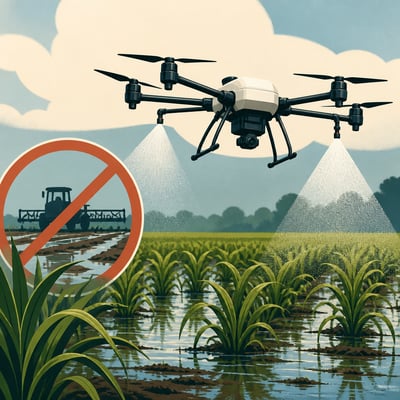
Farmers and agricultural service businesses are expanding drone use from scouting into spraying, spreading, and targeted treatment.
The strongest operational value appears in wet, irregular, or difficult fields and narrow disease-control windows, where drones complement ground rigs and aircraft. Newer systems add larger payloads, radar or lidar sensing, and longer endurance, but battery logistics, calibration, licensing, insurance, pesticide rules, and uncertain payback continue to constrain wider deployment.
The story has broadened from spray-drone adoption and platform upgrades to a more complete commercial workflow centered on scouting, mapping, and targeted treatment. It now also emphasizes the operational and economic constraints—especially batteries, charging, calibration, and uncertain payback—alongside a wider set of stakeholders and regions.
The story has broadened from spray drones mainly for crop protection to a wider commercial farm-tool category that also includes spreading and lifting, with more emphasis on larger-scale operations and precision features. The framing also tightens the main constraints around regulation, chemical labeling, insurance, weather, and operator safety, while adding Europe as a regulatory barrier zone.