
 AI Governance
 Data Centers
 Drones
 Climate
 Privacy
 2026 Maine Senate
 Bob Dylan
Tariffs Test Collins’s Independence
Coverage from CBC News, Knewz, and others
U.
S.-Canada tariffs have become a prominent economic issue in the contest between Republican Susan Collins and Democrat Troy Jackson. Collins has opposed the tariffs and sought exemptions, warning of costs to Maine businesses, consumers, and communities; Jackson argues her response has been insufficient. The dispute matters because Canada is a major trade and energy partner for Maine, while the scale and duration of the tariffs’ effects remain unsettled.
A Millinocket aquaculture project was reportedly paused amid uncertainty over tariffs on Canadian equipment, giving the trade dispute a concrete local business impact. The coverage also highlights Maine’s reliance on Canadian supplies, including heating fuel, beyond export markets.
The current version largely confirms the existing framing, adding a more specific measure of Maine's Canadian trade dependence: roughly 40% of goods exports go to Canada.
The story adds municipal cost exposure and specific tariff-relief efforts, while otherwise confirming that tariffs remain the race’s central economic and political issue.
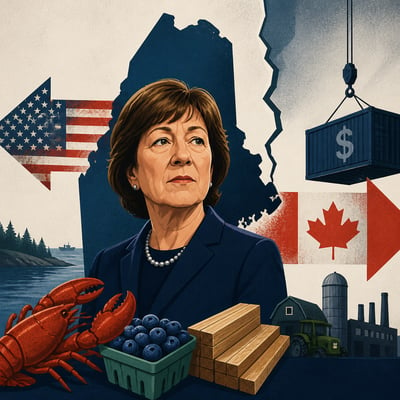
The 2026 Maine Senate contest is increasingly focused on President Donald Trump’s tariffs on Canada and their potential effects on lobster, blueberries, lumber, agriculture, manufacturers, consumers, and other Maine interests. Susan Collins has warned that tariffs and Canadian retaliation could raise costs and hurt exporters, while Troy Jackson argues that her opposition to Trump has not gone far enough. The dispute gives Jackson a way to challenge Collins’ independence while forcing Collins to defend both her record and her position within the Republican administration.