
 AI Governance
 Data Centers
 Drones
 Climate
 Privacy
 2026 Maine Senate
 Bob Dylan
NASA Tests BVLOS Kidney Transport
Coverage from DroneXL, UNOS, and others
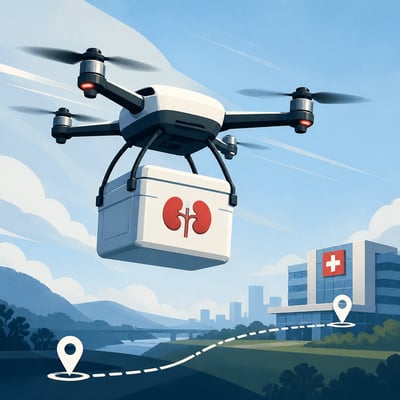
NASA, the United Network for Organ Sharing, and LifeNet Health tested a Freefly Alta X heavy-lift drone to carry research-donated human kidneys beyond visual line of sight in Virginia.
The approximately 15-minute flights covered about 7.5 miles while sensors and pre- and post-flight biopsies monitored organ condition, with preliminary results showing no evidence of harm. The work points to possible first-mile and last-mile uses between hospitals, airports, and transplant centers, but routine deployment still depends on operational validation and FAA approval for BVLOS flights carrying organ-sized payloads.
The update adds concrete flight details: the kidneys were carried by a Freefly Alta X heavy-lift drone on June 5 over about 7.5 miles, with biopsies and sensors confirming no preliminary harm. It also slightly strengthens the operational framing by naming Freefly and making clear that routine use still hinges on FAA BVLOS authorization.
The update mainly clarifies the transport concept and regulatory constraint: the project is now framed around first-mile and last-mile delivery, with FAA BVLOS approval still the key blocker. It also adds a new technical detail about preservation pumps and sensor monitoring used in the tests.